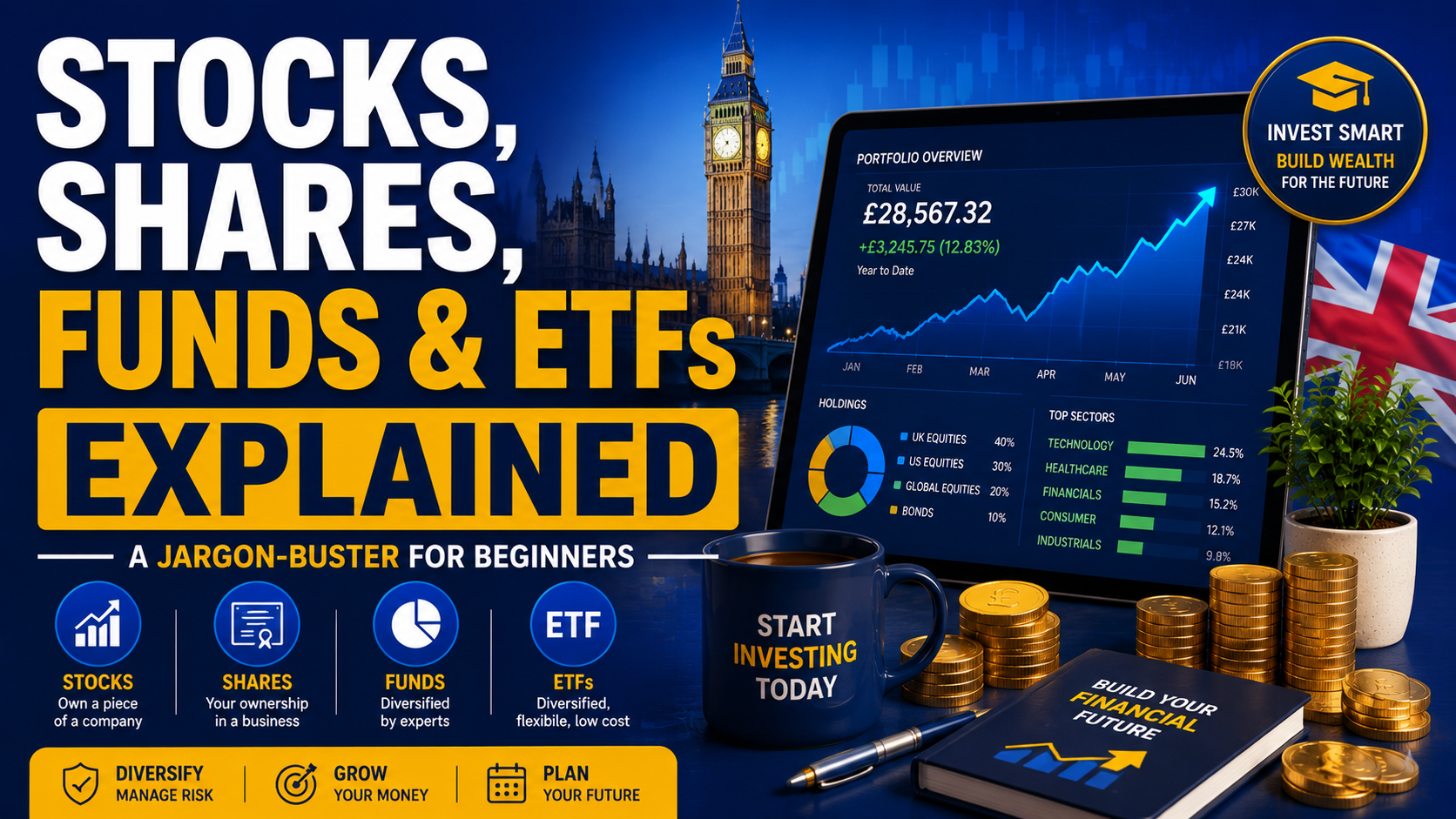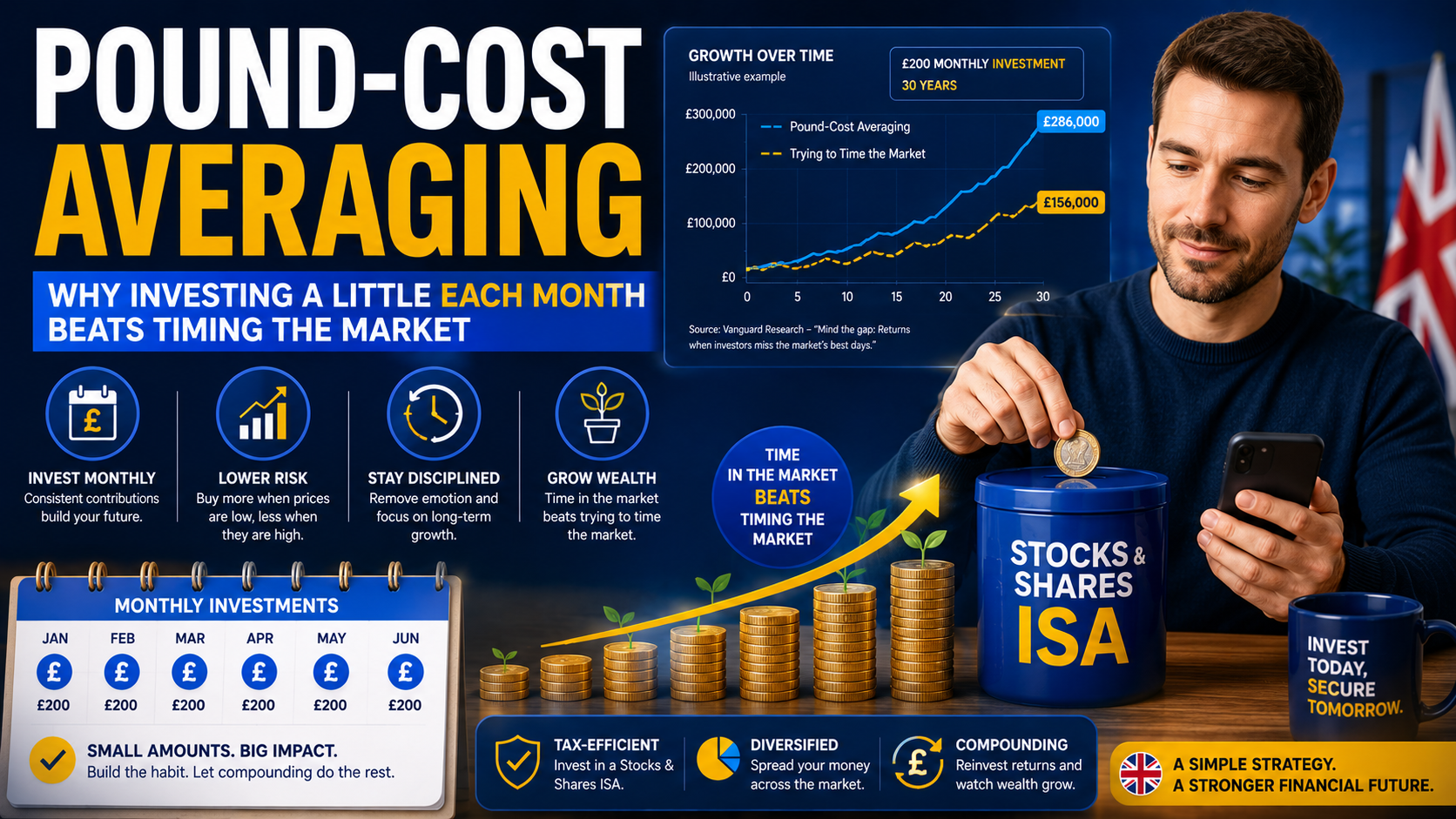
If you spend any time researching investing, you will quickly notice one recommendation appearing again and again. Whether it comes from financial advisers, investing books, personal finance bloggers, or experienced investors, the answer is often the same: start with an index fund.
For beginners, this can seem surprisingly simple. After all, investing is often portrayed as a complex world filled with stock picks, market predictions, and constant decision-making. Yet many experts argue that buying a single diversified index fund is one of the smartest ways to build wealth over the long term.
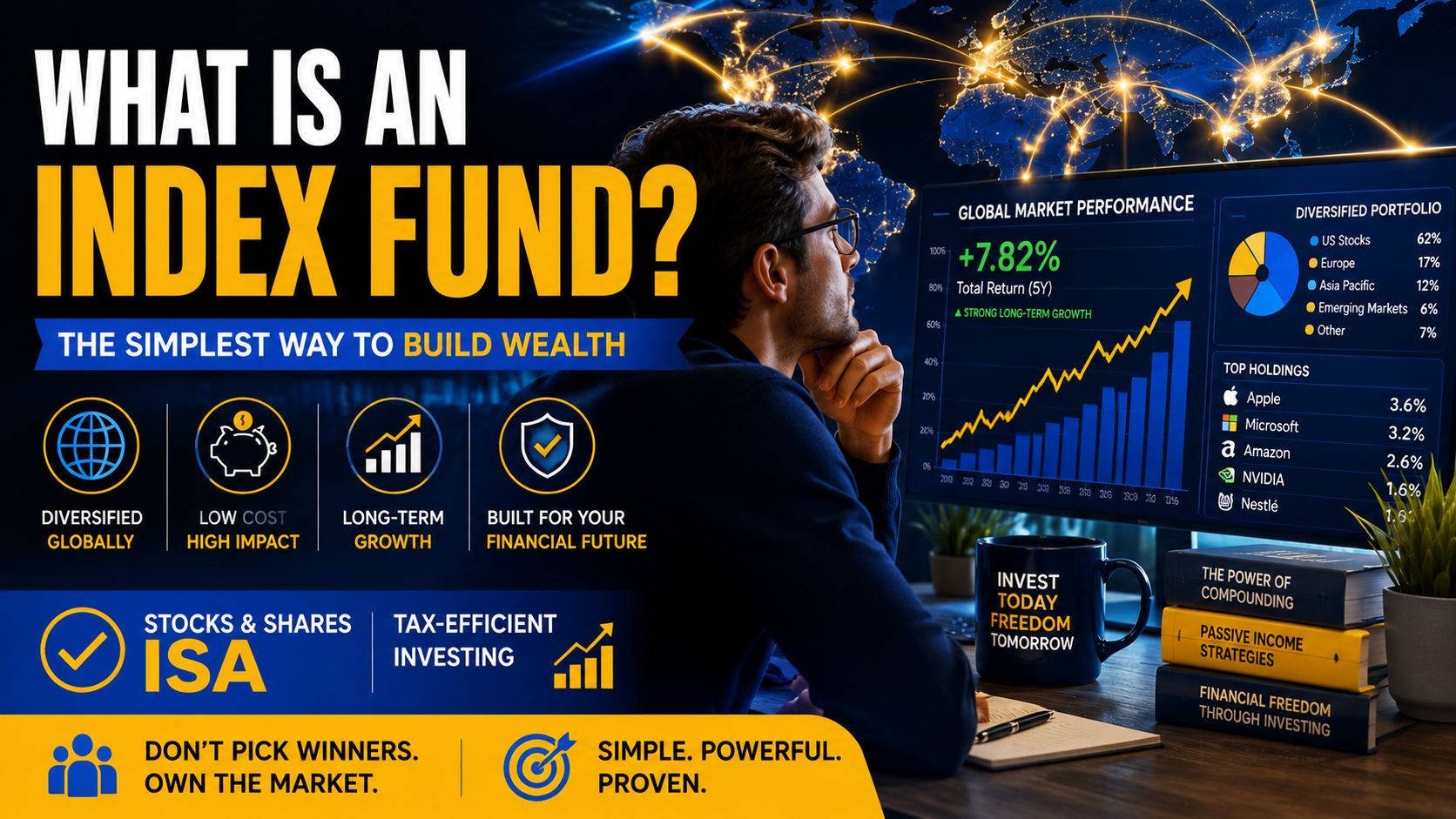
So what exactly is an index fund, and why has passive investing become one of the most popular investment strategies in the UK and around the world?
What Is an Index Fund.
An index fund is an investment fund designed to track the performance of a specific market index.
A market index is simply a collection of investments that represents a particular part of the market. For example, the FTSE 100 tracks 100 of the largest companies listed in the UK, while the S&P 500 follows 500 of the largest companies in the United States.
Instead of trying to beat the market by selecting individual shares, an index fund aims to match the performance of its chosen index. The fund automatically holds the same companies and adjusts when the index changes.
This approach removes much of the guesswork from investing and gives investors exposure to a broad range of companies through a single investment.
What Is Passive Investing.
Passive investing is the strategy of buying investments that track the market rather than trying to outperform it.
Traditional active fund managers spend significant resources researching companies and deciding which shares to buy and sell. Their goal is to generate returns higher than the market average.
Passive investing takes a different approach. Rather than attempting to predict winners and losers, passive investors simply own the market itself through index funds.
The result is a strategy that is often cheaper, simpler, and easier to maintain over the long term.
Today, passive investing has become one of the fastest-growing areas of the investment industry because many studies have shown that actively managed funds frequently struggle to outperform their benchmarks after fees.
Why Are Index Funds So Popular.
The popularity of index funds comes down to three key advantages: diversification, low costs, and simplicity.
When you buy a broad index fund, you instantly gain exposure to hundreds or even thousands of companies. This diversification reduces the impact of any single company performing poorly.
For example, a global index fund may hold shares in companies such as Apple, Microsoft, Amazon, Nestlé, Unilever, and thousands more. If one company struggles, the overall impact on the portfolio is usually limited.
Cost is another major advantage. Because index funds do not require expensive teams of analysts and fund managers, their annual charges are often extremely low.
Many popular global index funds charge less than 0.25% per year, compared with active funds that may charge 1% or more annually.
That difference might sound small, but over decades it can have a significant impact on investment returns.
Why Costs Matter More Than Most Investors Realise.
One of the most important investing lessons is that fees are one of the few things investors can control.
Imagine two investors each start with £10,000 and earn identical market returns over 30 years. One pays annual fees of 0.20%, while the other pays 1.20%.
The investor paying lower fees will typically end up with substantially more money because less of their return is being lost to charges every year.
This is one reason why legendary investor Warren Buffett has repeatedly advocated low-cost index fund investing for most people.
Keeping costs low allows more of your money to remain invested and continue compounding over time.
How Diversification Reduces Risk.
Many beginners make the mistake of believing diversification means owning several shares.
In reality, true diversification means spreading your investments across different sectors, industries, countries, and regions.
A single global index fund can provide exposure to thousands of businesses operating across North America, Europe, Asia, and emerging markets.
This helps reduce company-specific risk and avoids the danger of relying heavily on a handful of stocks.
Diversification does not eliminate market risk entirely. The value of investments can still rise and fall. However, it can help smooth the investment journey and reduce the impact of individual business failures.
The Most Popular Index Funds for Beginners.
Many UK investors choose broad global index funds because they provide exposure to a wide range of companies around the world.
Common examples include:
- FTSE Global All Cap Index Funds.
- MSCI World Index Funds.
- FTSE Developed World Index Funds.
- S&P 500 Index Funds.
- Global All-World ETFs.
Among beginner investors in the UK, global equity index funds are often considered the simplest starting point because they offer instant diversification across multiple countries and sectors.
Rather than trying to identify which region will perform best next year, investors gain exposure to the global economy as a whole.
How UK Investors Typically Buy Index Funds.
The most common route for UK investors is through a Stocks and Shares ISA.
A Stocks and Shares ISA allows investments to grow free from UK income tax and capital gains tax, making it one of the most tax-efficient ways to invest. More than 4 million people contributed to a Stocks and Shares ISA during the 2023-24 tax year, according to HMRC data.
The latest HMRC figures also show there were approximately 21.3 million adult ISA holders, highlighting the continued popularity of tax-efficient investing in the UK.
Many investment platforms allow investors to start with relatively small monthly contributions, making index fund investing accessible even for those just beginning their financial journey.
Interesting UK Investing Statistics.
The growth of passive investing is part of a wider shift in how Britons invest.
According to the Financial Conduct Authority's Financial Lives Survey, Stocks and Shares ISAs remain one of the most commonly held investment products in the UK, with around 9.3 million adults holding one in 2024.
HMRC data shows Stocks and Shares ISAs account for nearly 59% of the total market value held within ISA investments.
Meanwhile, UK households contributed a record £103 billion into ISAs during the 2023-24 tax year across approximately 15 million subscribed accounts.
Research also suggests that many investors may still be holding substantial amounts of cash. Analysis from AJ Bell found that around £100 billion is held in cash ISAs by individuals with significant balances who do not invest, potentially missing out on long-term growth opportunities.
These figures illustrate why interest in index funds and passive investing continues to grow among UK savers looking to build wealth over time.
Are Index Funds Risk Free.
No investment is completely risk free.
The value of index funds can fall during market downturns, economic recessions, or periods of uncertainty.
However, history shows that global stock markets have generally trended upwards over long periods despite short-term volatility.
This is why index funds are typically viewed as long-term investments rather than short-term trading tools.
Most investors using passive investing strategies focus on investing consistently over many years rather than attempting to time market movements.
Is an Index Fund Right for Beginners.
For many people, an index fund offers an excellent introduction to investing.
It provides broad diversification, low costs, and a simple investment process that removes much of the complexity often associated with the stock market.
Instead of spending hours researching individual shares, beginners can focus on building good habits such as investing regularly, staying invested during market fluctuations, and maintaining a long-term perspective.
While every investor's circumstances are different, it is easy to understand why index funds have become one of the most recommended investment products in the world. They offer a straightforward way to participate in the growth of global businesses while keeping costs low and diversification high.
For investors seeking a simple path to long-term wealth building, passive investing through index funds remains one of the strongest starting points available today.
Want help getting started? Subscribe today and claim your free copy of the Investing for Beginners Handbook packed with practical tips for new investors.