Choosing an investment platform might not be the most exciting part of investing, but it is one of the most important. The platform you use can affect how much you pay in fees, what investments you can access, how easy it is to manage your portfolio and, ultimately, how much of your returns you keep.
The UK investment market has never been bigger. The UK's direct-to-consumer investment market recently surpassed £470 billion in assets across more than 12 million customer accounts, highlighting just how many people now use online investment platforms to build wealth.
With dozens of providers competing for investors, choosing the right platform can feel overwhelming. Some platforms are designed for beginners who want simplicity, while others cater to active traders or experienced investors seeking advanced tools.
This guide explains how to choose an investment platform in the UK, compares the most popular providers, outlines the fees you need to understand and highlights common mistakes to avoid.
Why your investment platform matters.
Many investors spend hours researching funds, ETFs and shares but pay little attention to the platform that holds them. That can be costly.
A difference of just 0.3% or 0.4% per year in platform fees might not sound significant, but over decades of investing it can amount to thousands of pounds. The right platform can also make it easier to use tax-efficient accounts such as Stocks and Shares ISAs and SIPPs, helping you keep more of your investment returns.
The UK platform industry now oversees more than £1.3 trillion in assets, demonstrating how central these providers have become to retail investing.
The main types of investment platforms.
Before comparing providers, it helps to understand the different types of platforms available.
Low-cost investing platforms.
These platforms focus on simplicity and low fees. They are often best suited to long-term investors who primarily buy funds and ETFs.
Examples include Vanguard Investor and Trading 212 Invest.
Full-service investment platforms.
These providers offer wider investment choice, research tools, educational content and customer support.
Examples include Hargreaves Lansdown, AJ Bell and Interactive Investor.
Trading-focused platforms.
These platforms are designed for investors who trade regularly and want advanced charting tools, market data and rapid execution.
Examples include Interactive Brokers and IG.
Understanding investment platform fees.
One of the biggest mistakes investors make is focusing only on headline fees.
There are several costs that can affect your overall returns.
Platform fees.
This is the annual fee charged for holding investments on the platform.
It is usually charged as either:
- A percentage of assets held
- A fixed monthly subscription
Percentage-based fees tend to work well for smaller portfolios. Fixed-fee platforms can become more cost-effective as your portfolio grows.
Trading fees.
Many providers charge each time you buy or sell shares, ETFs or investment trusts.
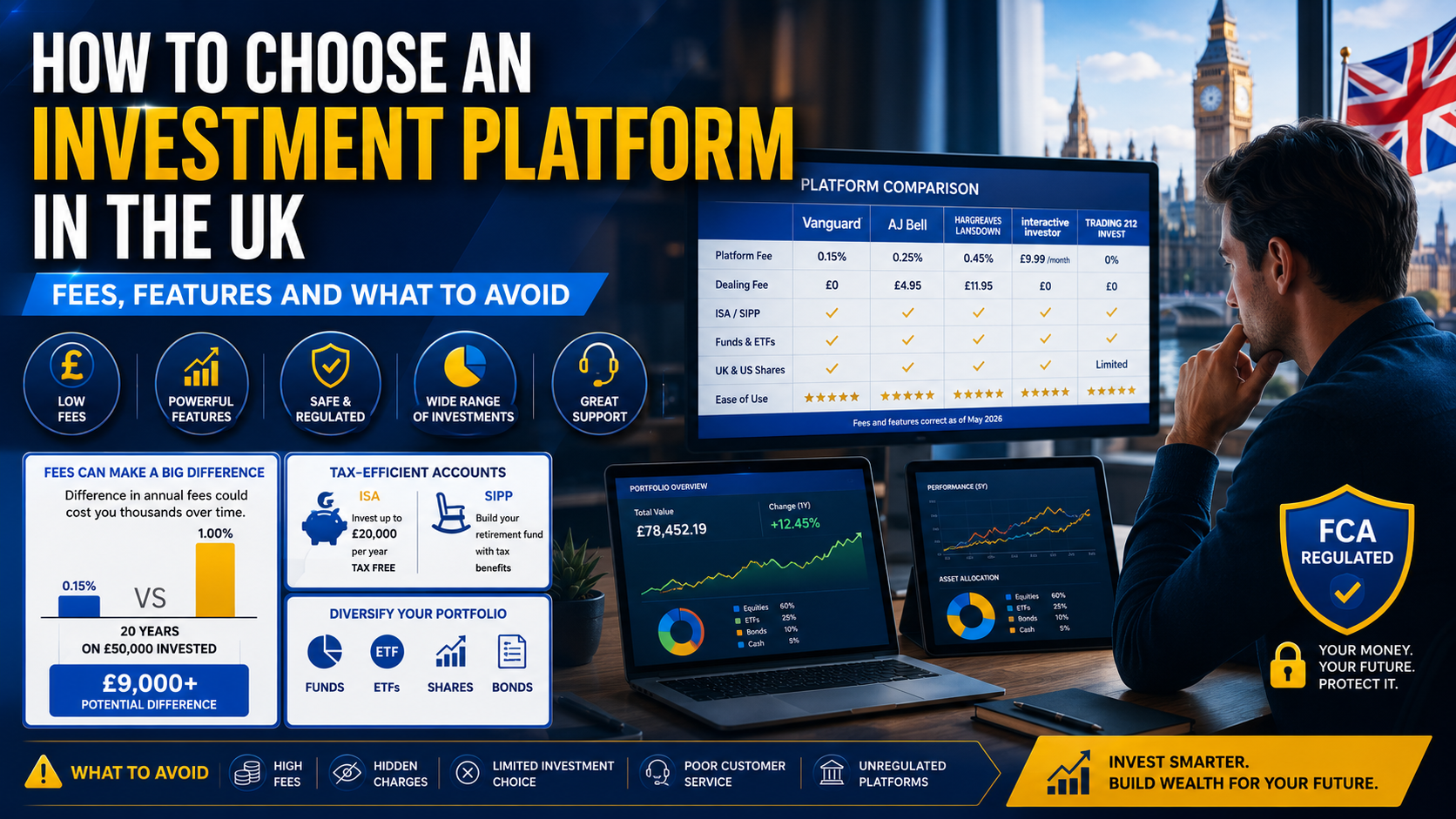
Some platforms offer commission-free trading, while others charge between £3.50 and £12 per trade.
Fund charges.
If you invest in funds, you will also pay the fund's ongoing charges figure, known as the OCF.
This fee is separate from the platform fee and is charged by the fund manager.
Foreign exchange fees.
If you buy overseas shares, many platforms charge a currency conversion fee.
These charges can range from 0.15% to more than 1%.
Comparing popular UK investment platforms.
Vanguard Investor.
Vanguard has become one of the UK's fastest-growing investment platforms, with around 830,000 clients and more than £42 billion in assets under management.
Its main appeal is simplicity and low costs.
Pros:
- Low platform fee
- Excellent range of Vanguard funds and ETFs
- Ideal for passive investors
Cons:
- Only Vanguard investments available
- No individual share dealing
Best for: Beginners and long-term passive investors.
AJ Bell.
AJ Bell has built a strong reputation for balancing affordability with flexibility.
The platform offers shares, ETFs, funds, ISAs, SIPPs and Junior ISAs.
Pros:
- Competitive fees
- Wide investment selection
- Strong educational resources
Cons:
- Trading fees apply
- Interface slightly less beginner-friendly than some rivals
Best for: Investors seeking flexibility and value.
Hargreaves Lansdown.
Hargreaves Lansdown remains the UK's largest direct-to-consumer investment platform by assets under administration.
It is often regarded as the premium option.
Pros:
- Extensive research tools
- Strong customer service
- Large investment selection
Cons:
- Higher fees than some competitors
Best for: Investors who value research and support.
Interactive Investor.
Interactive Investor uses a flat-fee subscription model rather than percentage-based fees.
Pros:
- Fixed monthly pricing
- Large investment selection
- Strong for larger portfolios
Cons:
- Can be expensive for smaller investors
Best for: Investors with larger portfolios looking to reduce percentage-based costs.
Trading 212.
Trading 212 has attracted many younger investors with commission-free investing and an easy-to-use mobile app.
Pros:
- No dealing commissions
- User-friendly platform
- Fractional shares available
Cons:
- Limited research tools
- Not as comprehensive as traditional platforms
Best for: Cost-conscious investors and beginners.
What safety features should investors look for.
Investment performance is important, but safety should always come first.
When evaluating a platform, check the following:
FCA regulation.
The platform should be authorised and regulated by the Financial Conduct Authority.
This ensures it must meet strict operational and client protection requirements.
FSCS protection.
Eligible investors can benefit from Financial Services Compensation Scheme protection if a platform fails.
Current protection limits should always be verified directly with the FSCS and provider.
Segregated client assets.
Reputable platforms hold client assets separately from company funds.
This provides additional protection if the platform experiences financial difficulties.
Strong cybersecurity.
Look for features such as:
- Two-factor authentication
- Biometric login
- Account alerts
- Encryption technology
With investment scams continuing to rise across the UK, security should never be overlooked. Recent data suggests UK consumers lost hundreds of millions of pounds annually to investment fraud, highlighting the importance of choosing regulated providers.
Features that can improve your investing experience.
Fees matter, but the cheapest platform is not always the best option.
Investors should also consider features that support long-term success.
Stocks and Shares ISA availability.
Tax efficiency remains one of the biggest advantages available to UK investors.
ISA subscriptions reached record levels, with total UK ISA assets now worth hundreds of billions of pounds.
A platform offering a competitive Stocks and Shares ISA should be high on most investors' lists.
Pension and SIPP access.
Investors planning for retirement should check whether the platform offers a Self-Invested Personal Pension.
Educational resources.
For beginners, quality guides, videos and market insights can be extremely valuable.
Mobile app quality.
Many investors now manage portfolios primarily from smartphones.
A well-designed app can make investing easier and more engaging.
Common mistakes to avoid.
Choosing based only on fees.
A platform with rock-bottom costs but poor functionality may create frustration and limit your options.
Ignoring investment choice.
Some low-cost providers restrict the funds and shares available.
Always check the investment range before opening an account.
Overpaying for features you never use.
Active traders may benefit from advanced tools, but long-term investors often do not need them.
Falling for unregulated platforms.
The FCA recently took action against unauthorised investment-related activities, highlighting the importance of sticking with properly regulated providers.
If a platform promises guaranteed returns or appears unusually aggressive in its marketing, proceed with caution.
Which investment platform is best for you.
There is no single best investment platform for every investor.
If your priority is low-cost passive investing, Vanguard is often difficult to beat.
If you want a balance of affordability and flexibility, AJ Bell is a strong contender.
If research and support are your priorities, Hargreaves Lansdown remains a leading choice.
For larger portfolios, Interactive Investor's fixed-fee structure can become highly attractive.
Meanwhile, Trading 212 continues to appeal to younger investors seeking simplicity and low trading costs.
The most important step is choosing a regulated platform that aligns with your goals, investing style and portfolio size. A platform should help you stay invested for the long term rather than tempt you into unnecessary trading.
Successful investing is rarely about finding the perfect platform. It is about finding a platform that makes it easy to invest consistently, keep costs under control and stay focused on your long-term financial objectives.
Want to build confidence as a new investor? Subscribe today and receive your free copy of the Investing for Beginners Handbook delivered straight to your inbox.