If you are new to investing, it is easy to feel overwhelmed. Stocks, funds, ISAs, pensions, ETFs and investment platforms can seem like a completely different language. The good news is that successful investing is often much simpler than many people imagine.
Most long-term investors do not spend their evenings analysing company accounts or trying to predict the next stock market winner. Instead, they follow a straightforward process: clear expensive debt, build a financial safety net, invest through tax-efficient accounts and contribute regularly over time.
This guide explains exactly how to start investing in the UK, even if you have never bought an investment before. It is designed to be the starting point for beginners and the foundation for every other investing topic you may explore in the future.
Why investing matters more than ever.
Millions of people across the UK still rely heavily on cash savings despite inflation steadily reducing purchasing power over time. Research based on FCA Financial Lives data suggests that around 43% of UK adults have savings exceeding £10,000, yet many hold most or all of those assets in cash rather than investments.
While cash savings are essential for emergencies and short-term goals, investing offers the potential for long-term growth that can outpace inflation. Historically, global stock markets have delivered significantly higher returns than cash over long periods, although returns are never guaranteed and investments can fall in value.
The biggest advantage investors have is time. Starting early allows compound growth to work in your favour, meaning your investment returns can begin generating returns of their own.
Step 1: Clear expensive debt first.
Before investing, focus on high-interest debt.
Credit cards, payday loans and expensive personal borrowing can often charge interest rates far higher than the returns most investments are expected to generate. Paying off a credit card charging 25% interest is effectively a risk-free return equivalent to that rate.
This does not necessarily mean clearing every form of debt before investing. Many people invest while carrying a mortgage or low-interest student loan. However, expensive consumer debt should usually be your first priority.
A good rule is simple: if your debt interest rate is significantly higher than the long-term return you might expect from investing, tackle the debt first.
Step 2: Build an emergency fund.
Life happens. Boilers break, cars fail MOTs and unexpected expenses arrive at the worst possible moment.
An emergency fund helps prevent you from selling investments during a market downturn just to cover a surprise bill.
Many financial experts recommend holding three to six months of essential expenses in an accessible savings account. While everyone's circumstances differ, having cash available provides flexibility and peace of mind.
This is particularly important given the financial challenges many households face. A 2024 survey found that around one-third of UK adults had less than £500 in emergency savings.
Your emergency fund is not there to make money. Its job is to protect you when life becomes unpredictable.
Step 3: Open a Stocks and Shares ISA.
Once high-interest debt is under control and you have emergency savings in place, the next step is choosing where to invest.
For most beginners in the UK, a Stocks and Shares ISA is the obvious starting point.
A Stocks and Shares ISA allows investments to grow free from UK income tax and capital gains tax. This tax-efficient wrapper is one of the most valuable tools available to UK investors.
ISAs are already hugely popular. HMRC data shows that around 15 million adult ISA accounts received contributions during the 2023-24 tax year.
Opening an ISA is usually straightforward. Most major investment platforms allow you to open an account online within minutes. Popular providers include Vanguard, AJ Bell, Hargreaves Lansdown, Trading 212 and Fidelity.
When comparing platforms, consider account fees, fund choices, ease of use and customer support.
Step 4: Choose a simple diversified fund.
One of the biggest mistakes beginners make is believing they need to pick individual stocks.
In reality, many successful investors never buy individual shares at all.
Instead, they invest in diversified funds that hold hundreds or even thousands of companies around the world. This approach reduces the impact of any single company performing badly.
For beginners, a global index fund is often one of the simplest solutions available.
These funds track a broad market index and provide exposure to companies across multiple countries and sectors. Rather than trying to beat the market, they aim to match market performance while keeping costs low.
This approach forms the foundation of passive investing and is often recommended by financial experts because of its simplicity, diversification and low fees.
Step 5: Start small and invest regularly.
You do not need thousands of pounds to begin investing.
Many UK investment platforms allow investors to start with as little as £25 or £50 per month.
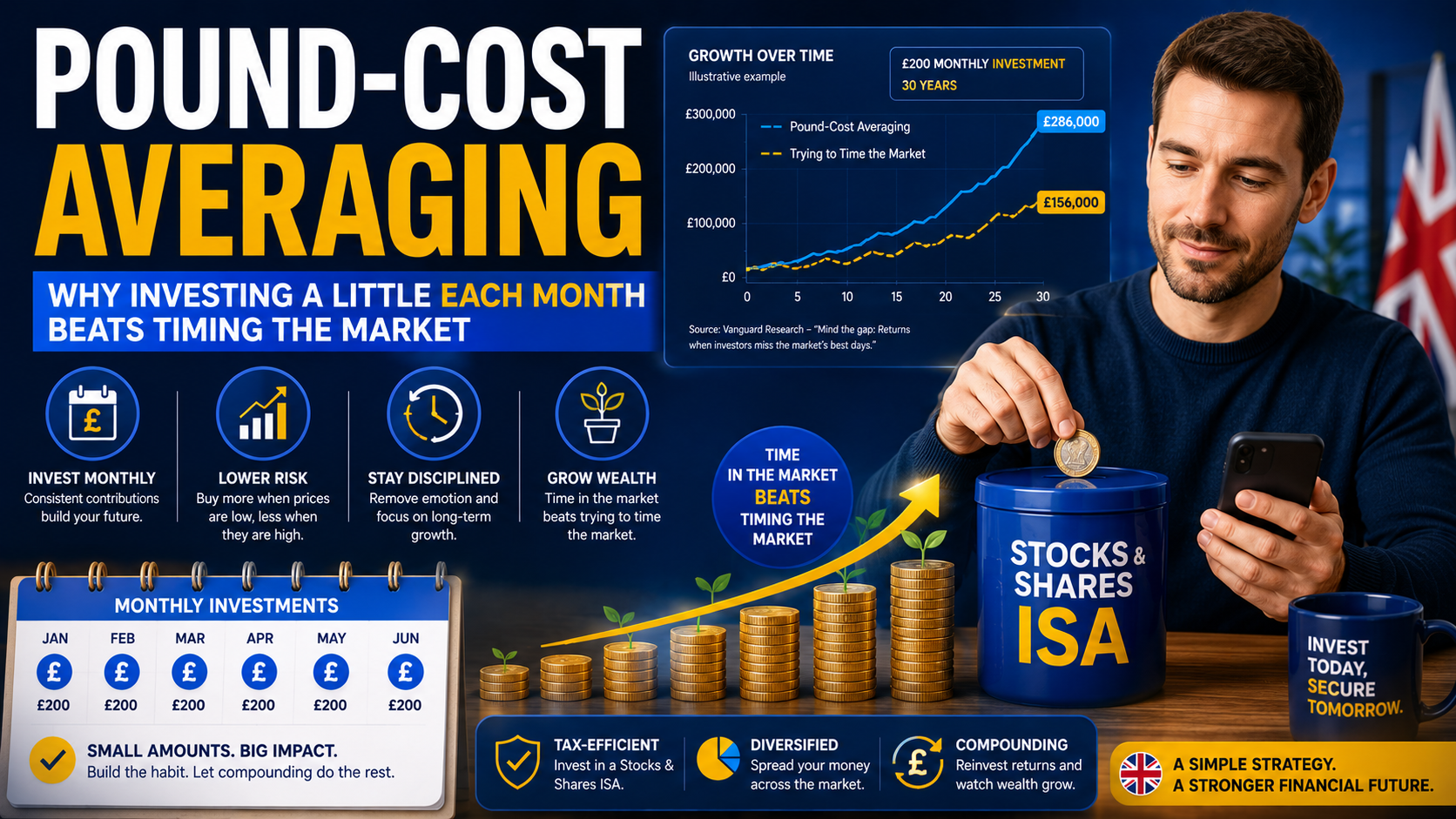
Regular investing, often known as pound-cost averaging, involves contributing the same amount each month regardless of market conditions.
This approach removes much of the emotion from investing. Instead of worrying about finding the perfect moment to invest, you build wealth steadily over time.
Consistency is usually more important than timing.
Investors who contribute regularly throughout market ups and downs often benefit from buying more units when prices fall and fewer when prices rise.
Step 6: Ignore short-term market noise.
Financial headlines are designed to attract attention.
Every week there seems to be a new crisis, market crash prediction or economic warning. While these stories can feel important, they rarely change the long-term strategy of a diversified investor.
Successful investing is often boring.
Rather than constantly checking portfolio values or reacting to market movements, focus on your long-term plan. Continue contributing regularly and allow time to do the heavy lifting.
Remember that market declines are normal. Every major market correction in history has felt uncomfortable while it was happening. Yet long-term investors who remained invested have generally been rewarded for their patience.
Step 7: Increase contributions as your income grows.
One of the most effective ways to accelerate wealth building is to increase your investment contributions whenever your earnings rise.
Pay rises, bonuses and additional income create opportunities to invest more without significantly affecting your lifestyle.
Even relatively small increases can make a substantial difference over decades.
For example, increasing monthly contributions from £100 to £150 may not feel dramatic today, but over 20 or 30 years the difference can amount to tens of thousands of pounds depending on investment returns.
The key is building investing into your financial routine rather than treating it as an occasional activity.
Common mistakes new investors should avoid.
Many beginners delay investing because they feel they need to know everything before starting.
In reality, investing is a skill that develops over time.
Some of the most common mistakes include waiting for the perfect moment, chasing hot investment trends, trying to predict market movements and constantly switching investments.
Another frequent mistake is leaving large amounts of long-term money sitting in cash. While cash serves an important purpose for short-term goals and emergencies, long-term wealth building often requires exposure to investments that can grow over time.
The most successful investors tend to follow a simple plan and stick with it.
Your next steps after getting started.
Once you have opened a Stocks and Shares ISA and started investing regularly, there are several areas worth exploring further.
You may want to learn more about passive investing, index funds, dividend investing, retirement planning, FIRE (Financial Independence, Retire Early), pensions and tax-efficient investing strategies.
Each of these topics builds upon the same foundation established here.
The important thing is not finding the perfect investment strategy immediately. It is taking the first step and beginning the journey.
Investing does not require expert-level knowledge, a finance degree or a large amount of money. It simply requires a willingness to start, remain consistent and think long term.
Want to accelerate your investing knowledge? Subscribe and download our free Investing for Beginners Handbook to discover practical strategies that could help you keep more of your investment returns.