Investing can seem intimidating when you're first starting out. Open almost any investing article and you'll quickly encounter terms like stocks, shares, ETFs, index funds, mutual funds, diversification and asset allocation. For many beginners, this jargon creates an unnecessary barrier to getting started.
The good news is that the basic building blocks of investing are actually much simpler than they appear. Once you understand what stocks, shares, funds and ETFs are, you'll find it much easier to read investment news, compare investment products and make informed decisions about your own financial future.
This guide breaks down the key investing terms every beginner should understand, using plain English and practical examples relevant to UK investors.
Why More Britons Are Learning About Investing.
Investing has become increasingly popular in the UK over the past few years. Research suggests around 23% of UK adults actively invested in the stock market during 2024, equivalent to approximately 12.5 million people. This represented a significant increase compared with previous years as more people turned to investing apps and online platforms.
At the same time, the value of assets held within UK ISAs reached a record £872 billion, highlighting the growing importance of investing as part of long-term financial planning.
Despite this growth, many people still keep large amounts of cash in savings accounts, often because they feel investing is too complicated. Understanding the basics can help bridge that gap.
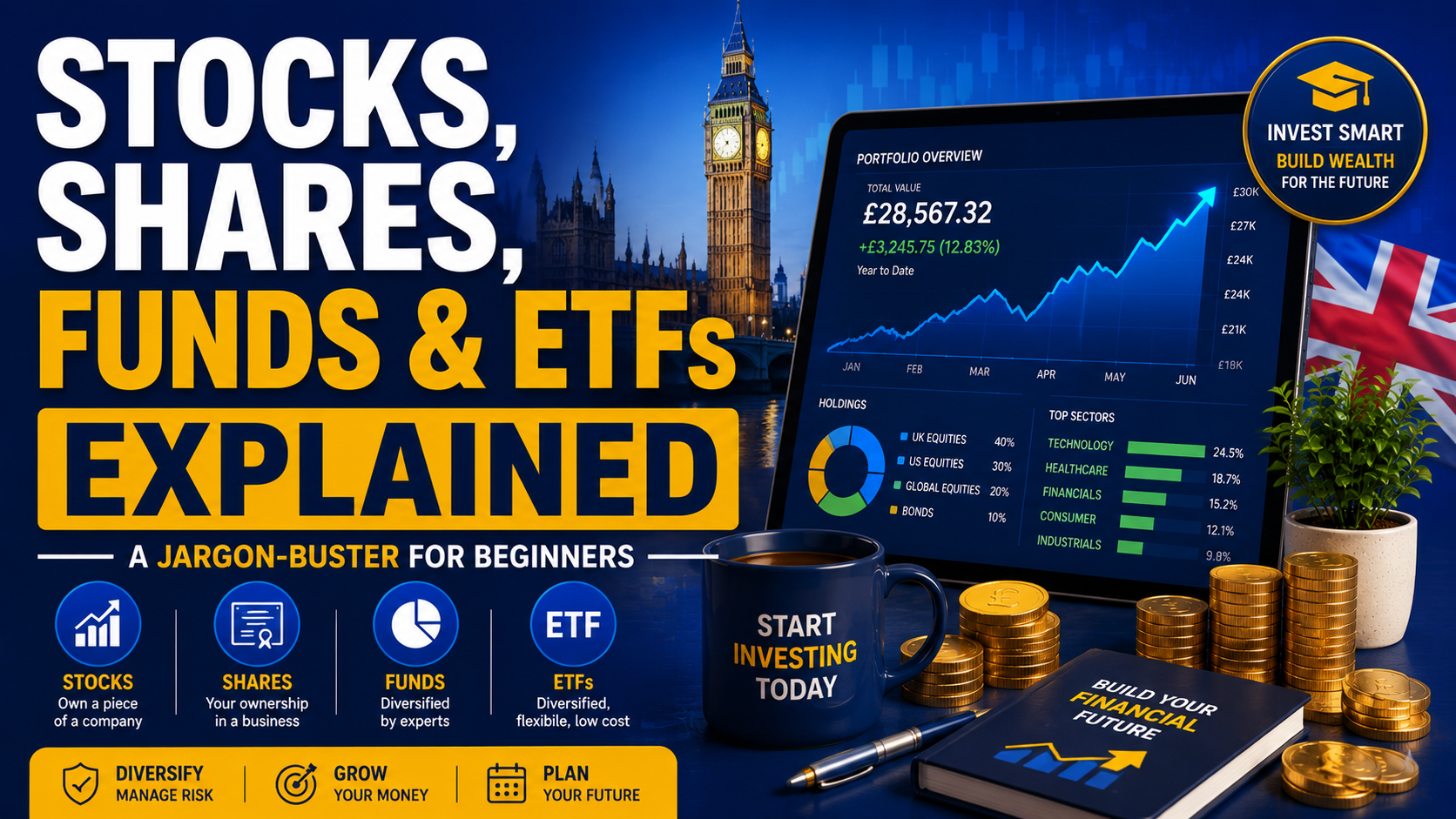
What Are Stocks And Shares.
In the UK, the terms "stocks" and "shares" are often used interchangeably, although there is a slight technical difference.
A share represents a small ownership stake in a company. If you buy shares in Tesco, Unilever or AstraZeneca, you become a part-owner of that business.
The word stock is often used to describe ownership in one or more companies collectively. For example, someone might say they own stocks in several UK companies.
When you buy shares, there are generally two ways you can potentially make money:
First, the share price may rise over time. If you buy a share for £10 and later sell it for £15, you've made a capital gain.
Second, some companies distribute part of their profits to shareholders through dividend payments.
Share prices move daily based on company performance, economic conditions, investor sentiment and market expectations. While shares can deliver attractive long-term returns, they can also fall in value, particularly over shorter periods.
What Is The Stock Market.
The stock market is simply a marketplace where investors buy and sell shares.
In the UK, the London Stock Exchange is one of the world's largest financial markets. Companies listed on the exchange range from household names like BP and Lloyds Banking Group to smaller growing businesses.
When you hear that "the market is up" or "the market is down", journalists are usually referring to major stock market indexes such as the FTSE 100, which tracks the performance of the UK's largest listed companies.
The FTSE 100 delivered a total return of approximately 11.4% during 2024, demonstrating how stock market investments can grow over time, although past performance never guarantees future results.
What Are Investment Funds.
Instead of buying individual shares yourself, you can invest through a fund.
An investment fund pools money from thousands of investors and uses that money to buy a diversified collection of assets.
Think of it like joining a group shopping trip. Rather than buying one item on your own, everyone contributes money and gains access to a much larger basket of investments.
A typical fund may hold hundreds or even thousands of shares across different countries and industries.
Professional fund managers oversee many funds, deciding which investments to buy and sell on behalf of investors.
Funds are popular because they offer instant diversification. Rather than relying on the success of a single company, your investment is spread across many businesses.
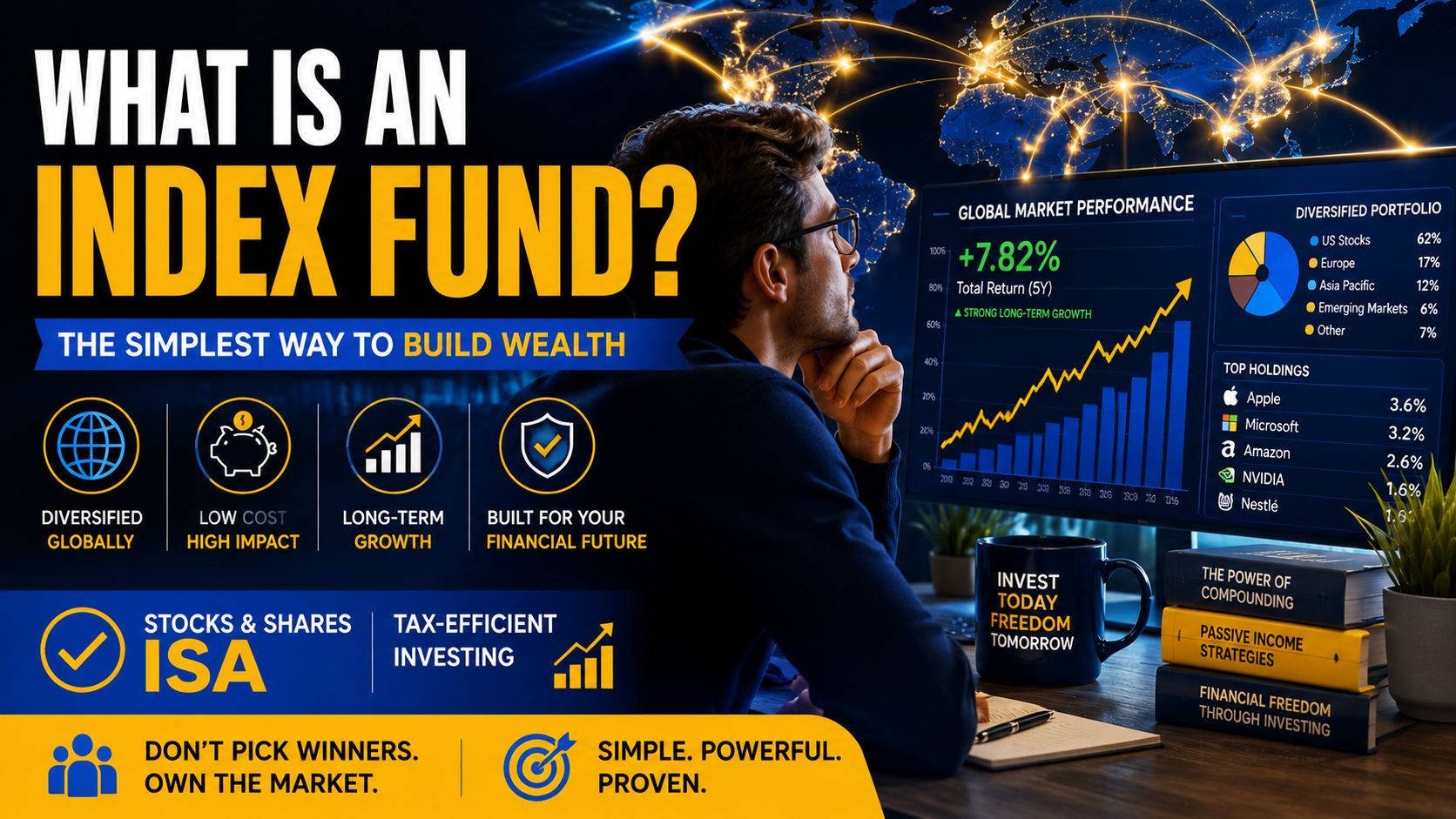
What Is An Index Fund.
An index fund is a specific type of investment fund designed to track a market index.
Rather than trying to beat the market, an index fund simply aims to match the performance of a particular index.
For example:
- A FTSE 100 index fund tracks the UK's largest companies.
- An S&P 500 index fund tracks 500 leading US companies.
- A global index fund tracks companies from around the world.
Because index funds require less active management, they usually have lower fees than actively managed funds.
This low-cost approach has made index investing extremely popular with beginner investors seeking a simple long-term strategy.
What Are ETFs.
ETF stands for Exchange Traded Fund.
An ETF is very similar to a traditional investment fund, but with one key difference.
Unlike conventional funds, ETFs trade on stock exchanges throughout the day, just like individual shares.
This means you can buy and sell ETFs whenever markets are open.
Many ETFs track popular indexes such as the FTSE 100, S&P 500 or MSCI World Index. Others focus on specific sectors, countries, commodities or investment themes.
ETFs have become one of the fastest-growing areas of investing because they combine diversification, flexibility and low costs.
Industry data shows that index-based investing continues to grow rapidly, with index funds accounting for around 35% of the UK fund market.
Funds Versus ETFs - What's The Difference.
For beginners, the practical differences between funds and ETFs are often smaller than many people realise.
Traditional funds are usually priced once each day. ETFs trade continuously during market hours.
ETFs often have slightly lower ongoing charges and greater flexibility. Traditional funds may offer features such as automated monthly investing without dealing charges, depending on the platform used.
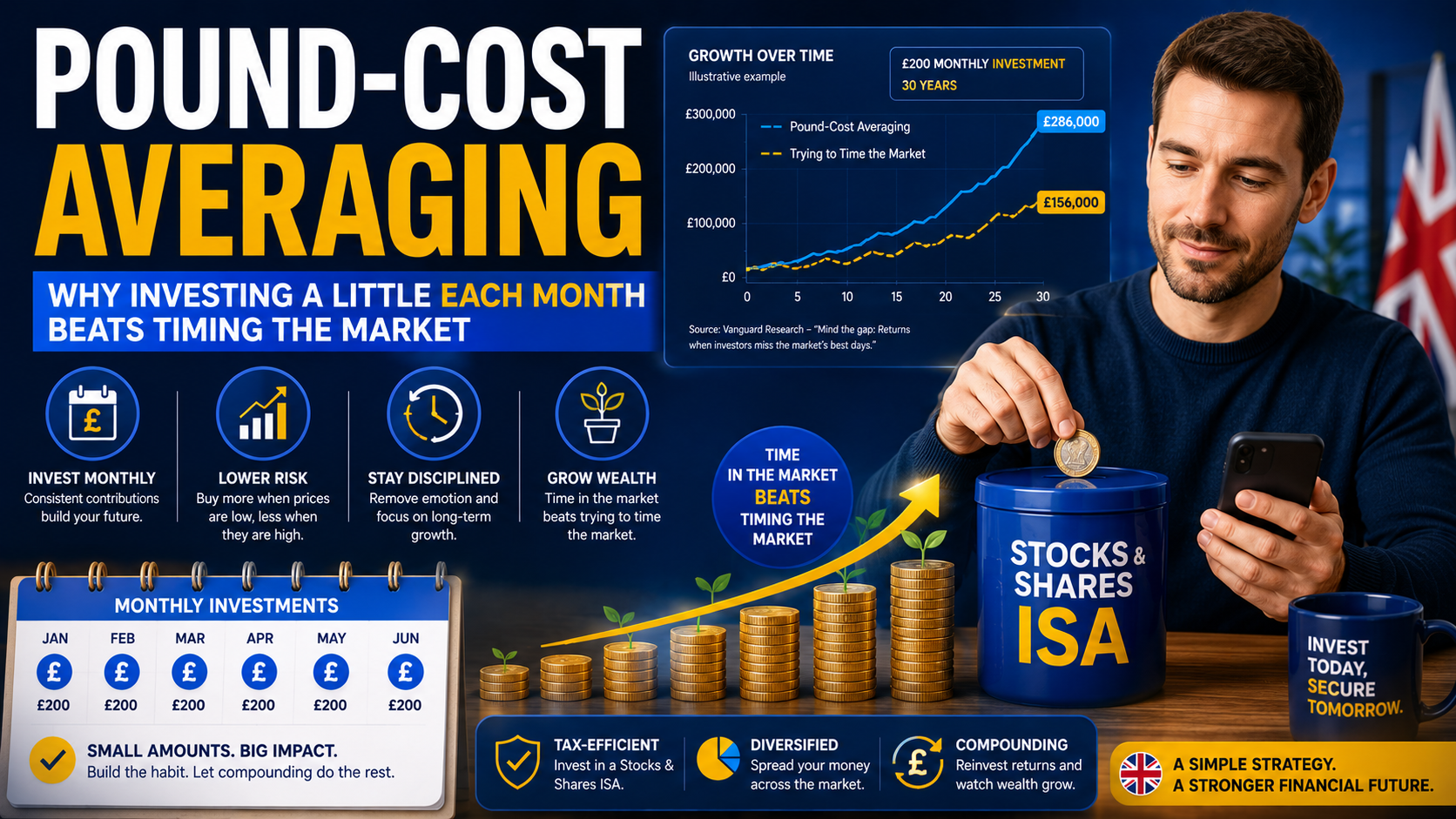
For long-term investors contributing monthly, either option can work effectively.
The most important factor is often choosing a diversified investment rather than worrying excessively about the fund structure.
Why Diversification Matters.
Diversification is one of the most important concepts in investing.
The idea is simple: don't put all your eggs in one basket.
If you invest everything in a single company and that business struggles, your portfolio could suffer significant losses.
However, if your money is spread across hundreds or thousands of companies, the impact of one poor performer becomes much smaller.
This is one reason why many beginner investors choose diversified funds or ETFs rather than selecting individual shares.
A global index fund, for example, may provide exposure to companies across North America, Europe, Asia and emerging markets in a single investment.
How UK Investors Hold Stocks, Shares And Funds.
Many UK investors hold their investments within a Stocks and Shares ISA.
This tax-efficient account allows investments to grow free from UK capital gains tax and dividend tax.
According to HMRC data, Stocks and Shares ISAs account for approximately 58.6% of the total value held within ISAs, while the overall UK ISA market reached £872 billion during the 2023-24 tax year.
More than 21 million adults hold ISAs, demonstrating just how widely used these accounts have become among UK savers and investors.
For beginners, a Stocks and Shares ISA is often one of the simplest and most tax-efficient ways to start investing.
Common Investing Terms Beginners Should Know.
You'll frequently encounter several key terms when researching investments.
Dividend: A payment made by a company to shareholders from its profits.
Capital Gain: Profit made when an investment increases in value.
Portfolio: Your collection of investments.
Volatility: The degree to which prices move up and down.
Asset Allocation: How your money is divided across different investment types.
Market Index: A measurement of a group of investments, such as the FTSE 100.
Expense Ratio: The annual fee charged by a fund or ETF.
Understanding these terms will make investing articles, market updates and fund descriptions far easier to follow.
Building Confidence As A New Investor.
Many successful investors started with little financial knowledge. The key difference is that they took the time to learn the basics before investing significant amounts of money.
You don't need to become a stock market expert overnight. Understanding stocks, shares, funds and ETFs provides a strong foundation for everything else you'll encounter on your investing journey.
Once you grasp these building blocks, concepts such as dividend investing, index investing, retirement planning and portfolio construction become far easier to understand.
Investing isn't about predicting the future perfectly. It's about making informed decisions, staying diversified and allowing time to work in your favour.
Want to learn more? Subscribe today and get your free copy of the Investing for Beginners Handbook packed with practical tips to help you start investing with confidence.