A Stocks and Shares ISA is often described as one of the best tax-efficient investment accounts available to UK investors. Yet despite its popularity, many people still find it confusing. Questions about tax, investment choices, platform fees and risk often stop beginners from getting started.
The good news is that a Stocks and Shares ISA is much simpler than it sounds. In plain English, it is a tax-free wrapper that allows you to invest your money without paying tax on investment gains, dividends or interest generated inside the account.
Whether you are investing for retirement, building long-term wealth or simply trying to make your money work harder than it would in a savings account, understanding how a Stocks and Shares ISA works could save you thousands of pounds over time.
What Is a Stocks and Shares ISA.
A Stocks and Shares ISA is a government-approved investment account available to UK residents aged 18 and over.
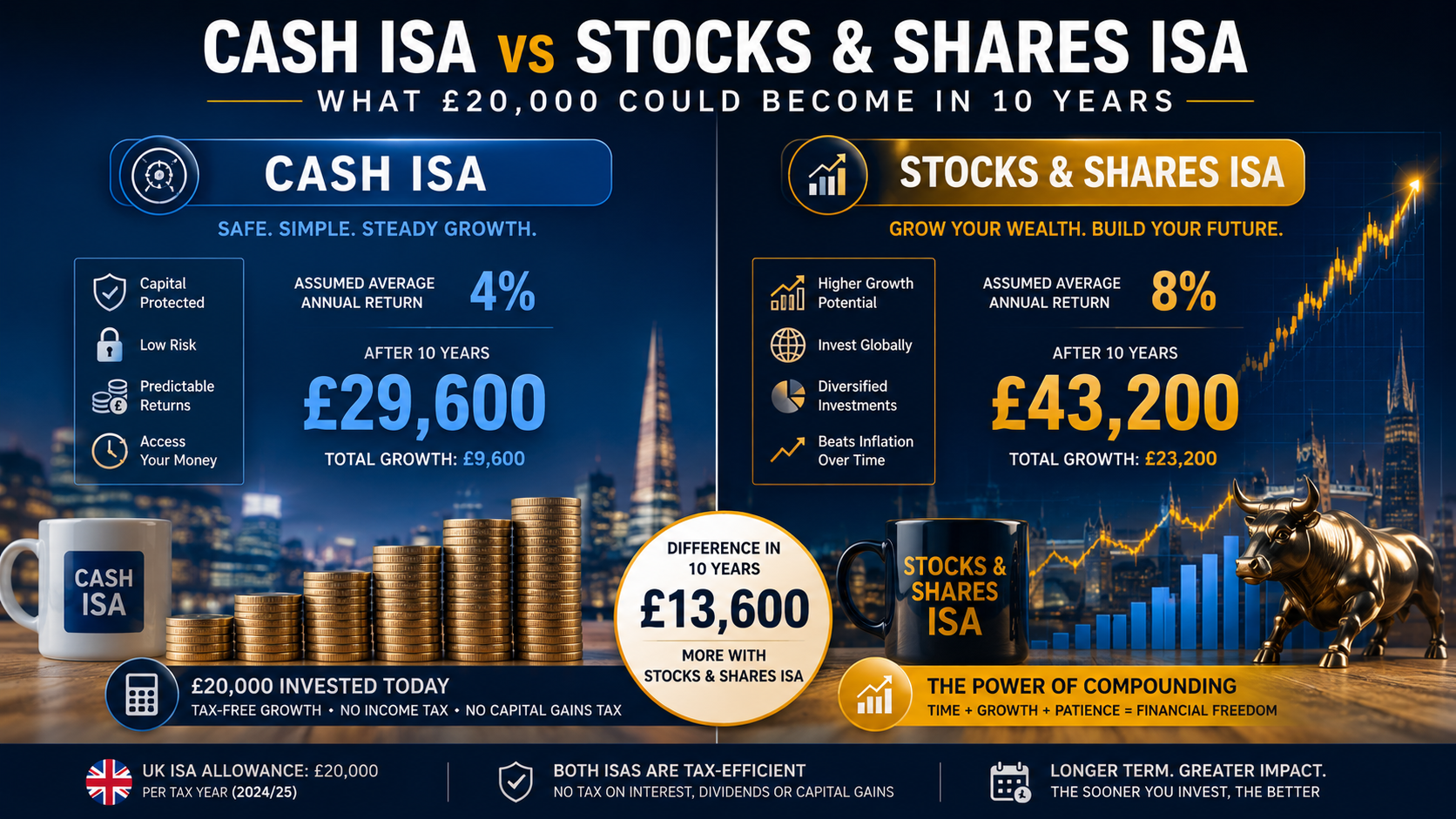
Instead of holding cash, you can use the account to invest in assets such as shares, investment funds, ETFs, bonds and investment trusts. The major advantage is that any growth, dividends or income generated within the ISA is generally free from UK income tax and capital gains tax.
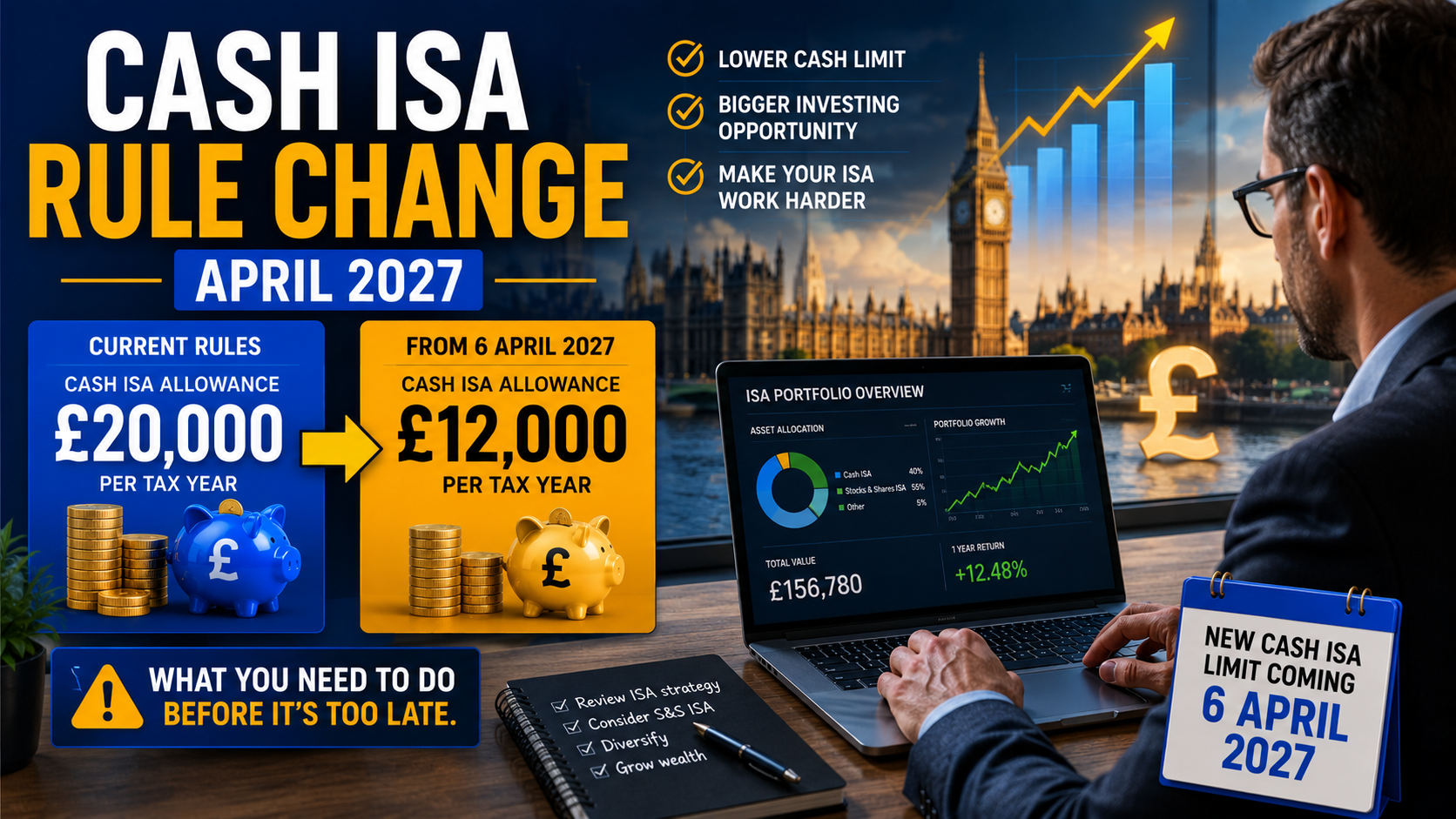
For the 2026/27 tax year, the ISA allowance remains £20,000. This means you can invest up to £20,000 across your ISA accounts during the tax year running from 6 April 2026 to 5 April 2027.
You do not have to invest the full amount. Many investors start with monthly contributions of £25, £50 or £100 before increasing their investments over time.
Why Are Stocks and Shares ISAs So Popular.
ISAs have become one of Britain's most widely used savings and investment products.
According to HMRC data, UK savers contributed a record £103 billion into ISAs during the 2023/24 tax year, with around 15 million ISA accounts receiving contributions.
Research also suggests that approximately 22.3 million UK adults hold an ISA of some kind, highlighting just how mainstream these accounts have become.
While cash ISAs remain more common, over 4 million people contributed to a Stocks and Shares ISA during the latest reporting period.
The growing popularity is largely driven by three factors:
- Tax-free investing.
- Potential for higher long-term returns.
- Flexibility to invest in a wide range of assets.
How Is a Stocks and Shares ISA Taxed.
One of the biggest attractions of a Stocks and Shares ISA is its tax treatment.
Within the account, you generally do not pay:
- Capital Gains Tax on investment growth.
- Dividend Tax on dividends received.
- Income Tax on interest generated by qualifying investments.
Outside an ISA, these taxes can significantly reduce your investment returns over time, particularly for higher-rate taxpayers.
For example, if a portfolio grows by £50,000 over several years outside an ISA, part of that gain may be subject to Capital Gains Tax. Inside a Stocks and Shares ISA, that gain would normally remain tax-free.
It is worth noting that ISAs are not completely exempt from all taxes. Inheritance Tax may still apply depending on your circumstances.
How Much Can You Invest In 2026/27.
The annual ISA allowance remains £20,000 for the 2026/27 tax year.
You can:
- Invest the entire £20,000 into a Stocks and Shares ISA.
- Split it between different ISA types.
- Contribute through lump sums or monthly deposits.
Unused ISA allowance does not roll over into future years, so if you do not use it before the tax year ends, it is lost.
This is one reason many experienced investors prioritise using their ISA allowance each year whenever possible.
How To Open a Stocks and Shares ISA.
Opening a Stocks and Shares ISA has become much easier over the last decade.
Most providers allow you to complete the entire process online within minutes.
Typically, you will need:
- Your National Insurance number.
- UK bank account details.
- Proof of identity.
- Basic personal information.
Once your account is approved, you can fund it via bank transfer, debit card or monthly direct debit.
Many platforms now allow investors to start with as little as £25 per month, making investing accessible even if you do not have a large lump sum available.
What Can You Hold Inside a Stocks and Shares ISA.
This is where beginners often become overwhelmed.
Technically, you can hold thousands of different investments. However, most investors do not need that level of complexity.
Common investments include:
Index Funds.
Index funds aim to track a stock market index such as the FTSE 100, FTSE All-World or S&P 500.
Because they simply follow the market rather than trying to beat it, costs are typically lower than actively managed funds.
Many long-term investors build their entire ISA around one or two diversified index funds.
Exchange-Traded Funds (ETFs).
ETFs work similarly to index funds but trade throughout the day like shares.
They provide diversification and are popular with passive investors looking for low-cost market exposure.
Individual Shares.
You can buy shares in companies listed on stock exchanges around the world.
While potentially rewarding, individual shares generally carry higher risk because your success depends on the performance of specific businesses.
Bonds.
Bonds are loans made to governments or companies.
They typically offer lower potential returns than shares but may reduce overall portfolio volatility.
Investment Trusts.
Investment trusts pool money from investors and are managed by professional fund managers.
Many focus on specific sectors, regions or investment strategies.
What Should Beginners Invest In.
For most new investors, simplicity often beats complexity.
Rather than attempting to pick winning shares, many financial experts favour broad diversification through low-cost global index funds.
A globally diversified index fund can provide exposure to thousands of companies across developed and emerging markets in a single investment.
This approach reduces the risk associated with individual companies while keeping costs relatively low.
Many beginner investors choose a simple strategy consisting of:
- One global index fund.
- Regular monthly contributions.
- A long-term investment horizon.
While no investment is guaranteed, history suggests that staying invested for many years generally improves the chances of positive outcomes compared with trying to time the market.
Common Mistakes New ISA Investors Make.
One of the biggest mistakes is delaying investment while waiting for the "perfect" moment.
Another common issue is holding too much cash. Research shows billions of pounds remain in cash ISAs despite the long-term growth potential available through investing.
Other mistakes include:
- Chasing hot investment trends.
- Trading too frequently.
- Ignoring fees.
- Investing without diversification.
- Taking more risk than you can comfortably handle.
Successful investing often involves patience rather than constant activity.
How To Choose a Stocks and Shares ISA Platform.
Once you understand what a Stocks and Shares ISA is, the next decision becomes where to open one.
The platform you choose can significantly impact your experience and long-term returns.
Compare Platform Fees.
Fees should be one of your first considerations.
Common charges include:
- Platform fees.
- Fund charges.
- Trading commissions.
- Foreign exchange fees.
Even small differences in fees can add up over decades of investing.
Look At Investment Choice.
Some platforms focus on simplicity and offer a smaller selection of funds.
Others provide access to thousands of shares, ETFs, funds and investment trusts.
Choose a platform that matches your investment style rather than simply selecting the platform with the biggest investment menu.
Check User Experience.
A good platform should make investing straightforward.
Look for:
- Easy account management.
- Clear reporting.
- Mobile app access.
- Educational resources.
- Responsive customer support.
For beginners, a user-friendly platform can make a significant difference.
Consider Minimum Investment Requirements.
Some providers allow investors to start with very small monthly contributions, while others may require larger deposits.
If you are just beginning, flexibility can be valuable.
Review Customer Reputation.
Independent reviews and customer feedback can provide insight into service quality, reliability and platform performance.
While no provider is perfect, consistent complaints about service or technical issues may be worth considering before opening an account.
Why Stocks and Shares ISAs Matter More Than Ever.
Tax efficiency is becoming increasingly important for UK savers and investors.
With frozen tax thresholds and growing concerns about future tax liabilities, more investors are looking for ways to protect investment returns.
At the same time, policymakers continue encouraging long-term investing as part of broader efforts to improve financial resilience and wealth creation across the UK.
For many people, a Stocks and Shares ISA remains one of the simplest and most effective ways to invest for the future while keeping more of their returns.
Whether you are investing £50 per month or maximising the full £20,000 allowance, understanding how these accounts work can help you make more informed financial decisions and build wealth more efficiently over the long term.
Want to build wealth more tax efficiently? Subscribe today and get your free copy of the UK Tax-Efficient Investing Playbook delivered straight to your inbox.