Financial Independence, Retire Early, better known as FIRE, has gone from a niche internet movement to a mainstream financial goal for thousands of people across the UK. At its core, FIRE is about gaining enough wealth and investment income to cover your living expenses without relying on a traditional job.
For some people, FIRE means retiring in their 40s. For others, it means having the freedom to work part-time, change careers, start a business or spend more time with family. The common theme is choice. FIRE is less about escaping work and more about creating financial independence.
As rising living costs continue to put pressure on household budgets, many Britons are looking for ways to take greater control of their financial future. Understanding how FIRE works is often the first step.
What Does FIRE Mean.
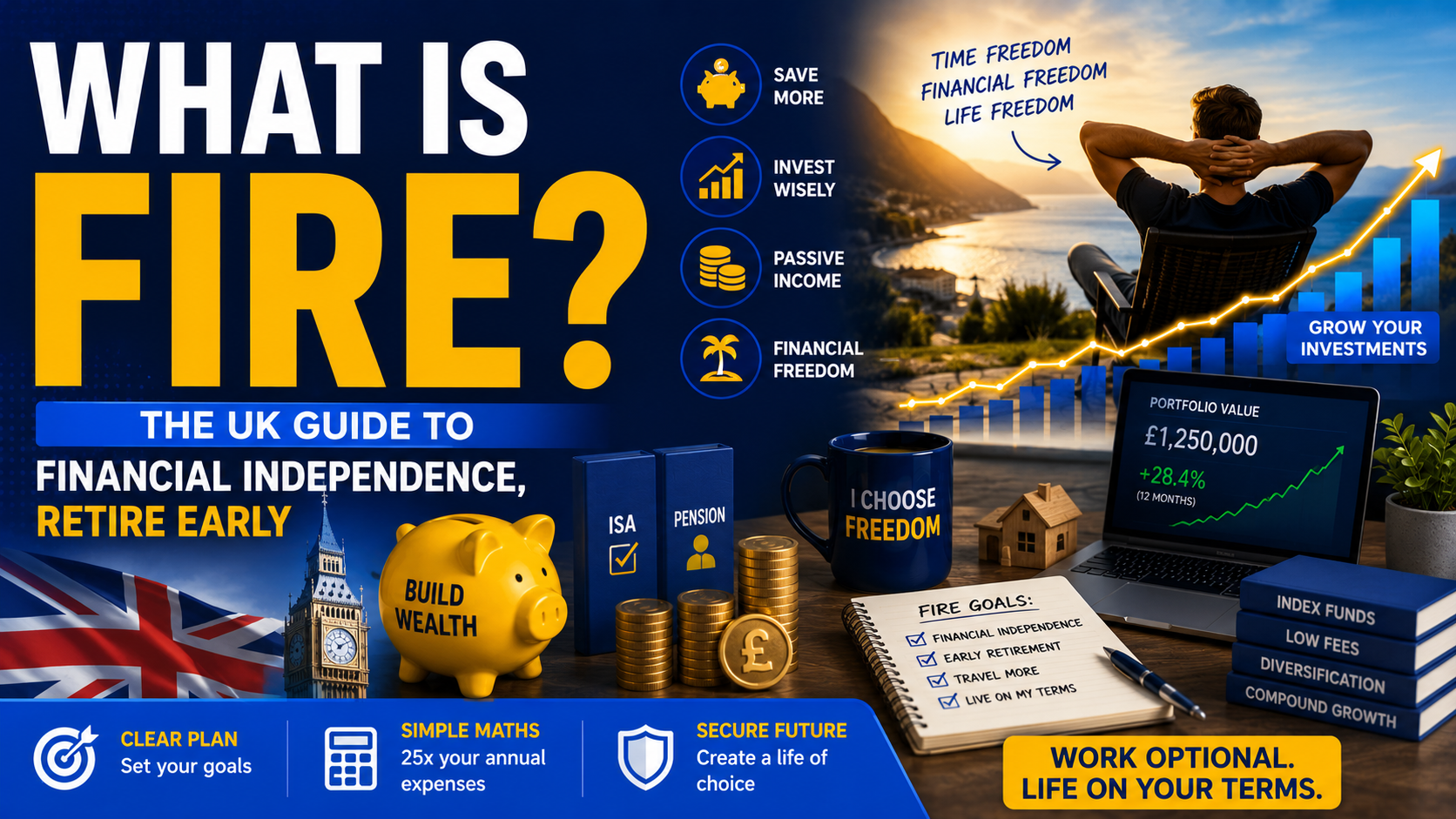
FIRE stands for Financial Independence, Retire Early.
Financial independence happens when your investments generate enough income to cover your annual expenses. At that point, work becomes optional because your money is working for you.
The "retire early" part often gets the most attention, but many people in the FIRE community focus on the independence rather than retirement itself. Some continue working because they enjoy it. Others reduce their hours, switch careers or pursue passion projects.
The movement gained popularity through personal finance blogs and investment communities that promoted high savings rates, simple investing strategies and long-term wealth building.
Why FIRE Is Growing In The UK.
The appeal of FIRE has grown significantly in recent years. Many workers have witnessed rising house prices, increasing living costs and uncertainty surrounding retirement planning.
At the same time, more people have access to low-cost investing platforms, Stocks and Shares ISAs and workplace pensions than ever before.
According to the Department for Work and Pensions, around 89% of eligible employees in Great Britain were saving into a workplace pension in 2024, representing approximately 21.7 million people. This demonstrates a growing awareness of long-term financial planning across the country.
Interest in tax-efficient investing has also increased. HMRC data shows UK savers contributed a record £103 billion into ISAs during the 2023-24 tax year, highlighting the growing demand for wealth-building vehicles that can support financial independence goals.
The Simple Maths Behind FIRE.
One of the reasons FIRE has become so popular is because the maths is surprisingly straightforward.
A widely used guideline within the FIRE community is the 25x rule.
This rule suggests that you need approximately 25 times your annual expenses invested to achieve financial independence.
For example:
- Annual spending: £20,000
- FIRE target: £500,000
Or:
- Annual spending: £40,000
- FIRE target: £1,000,000
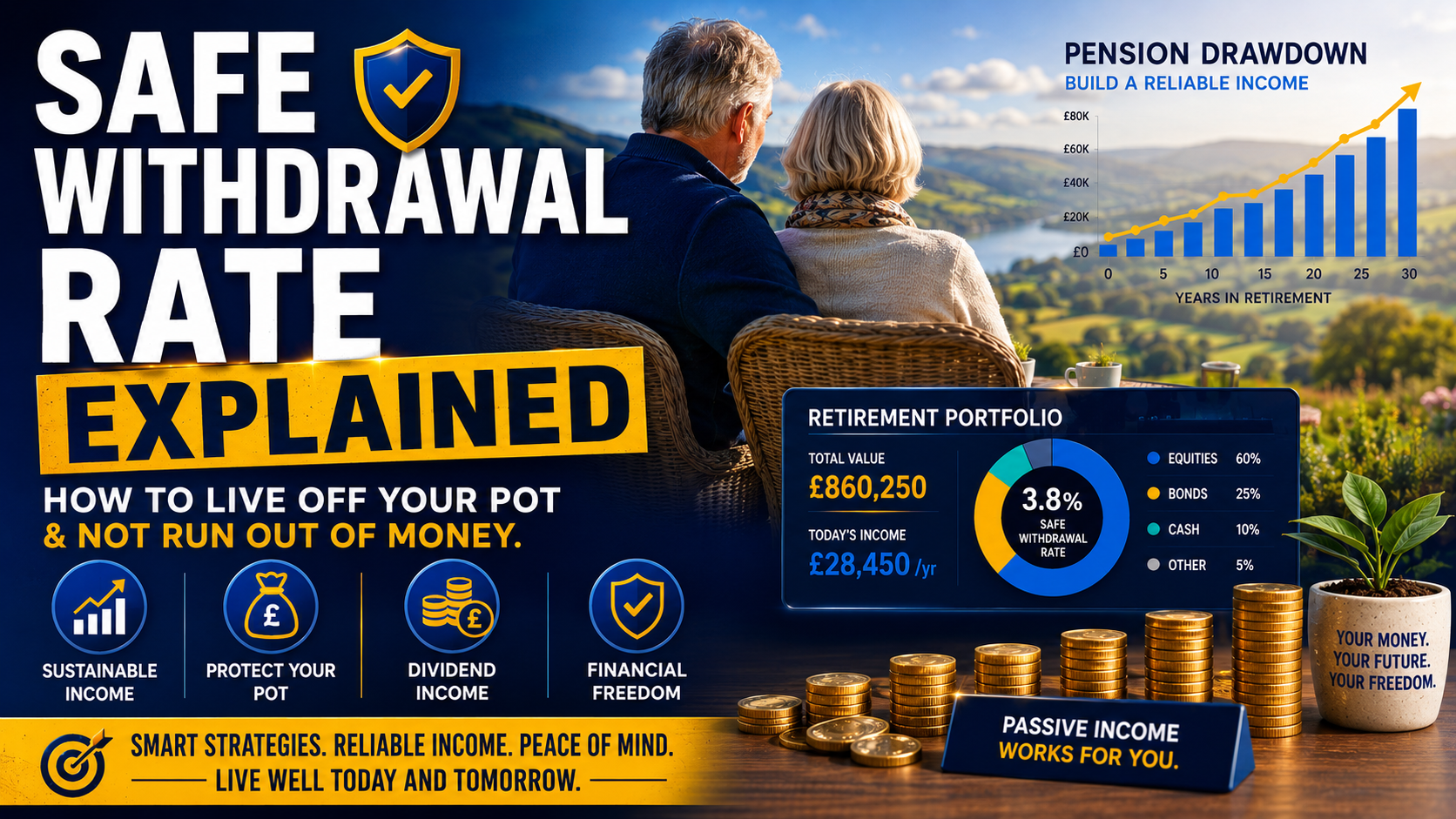
The rule is closely linked to the famous 4% rule, which suggests that withdrawing around 4% of a diversified investment portfolio annually may provide sustainable retirement income over the long term.
While these guidelines are not guarantees, they provide a useful framework for setting realistic goals.
The Most Important FIRE Number.
Many people assume income is the most important factor in reaching FIRE.
In reality, savings rate often matters more.
Your savings rate is the percentage of income you save and invest rather than spend.
For example:
- Saving 10% of income may require decades to achieve financial independence.
- Saving 30% can significantly reduce the timeline.
- Saving 50% or more can accelerate progress dramatically.
The higher your savings rate, the less money you need to live on and the more capital you build for future investment growth.
This is why many FIRE followers focus heavily on reducing unnecessary expenses while increasing income through career progression, side businesses or investing.
The Role Of Investing In FIRE.
Saving alone is rarely enough to achieve financial independence.
Investing allows your money to compound over time.
Many FIRE investors favour low-cost index funds because they offer broad diversification, minimal fees and historically strong long-term returns.
Rather than trying to pick winning stocks, index fund investors aim to capture overall market growth.
Popular UK investment vehicles include:
- Stocks and Shares ISAs
- Self-Invested Personal Pensions (SIPPs)
- Workplace pensions
- General investment accounts
Using tax-efficient accounts can make a significant difference over several decades by reducing tax on investment gains and income.
Understanding The Different Types Of FIRE.
Not everyone pursuing FIRE has the same goal.
Several variations have emerged over the years.
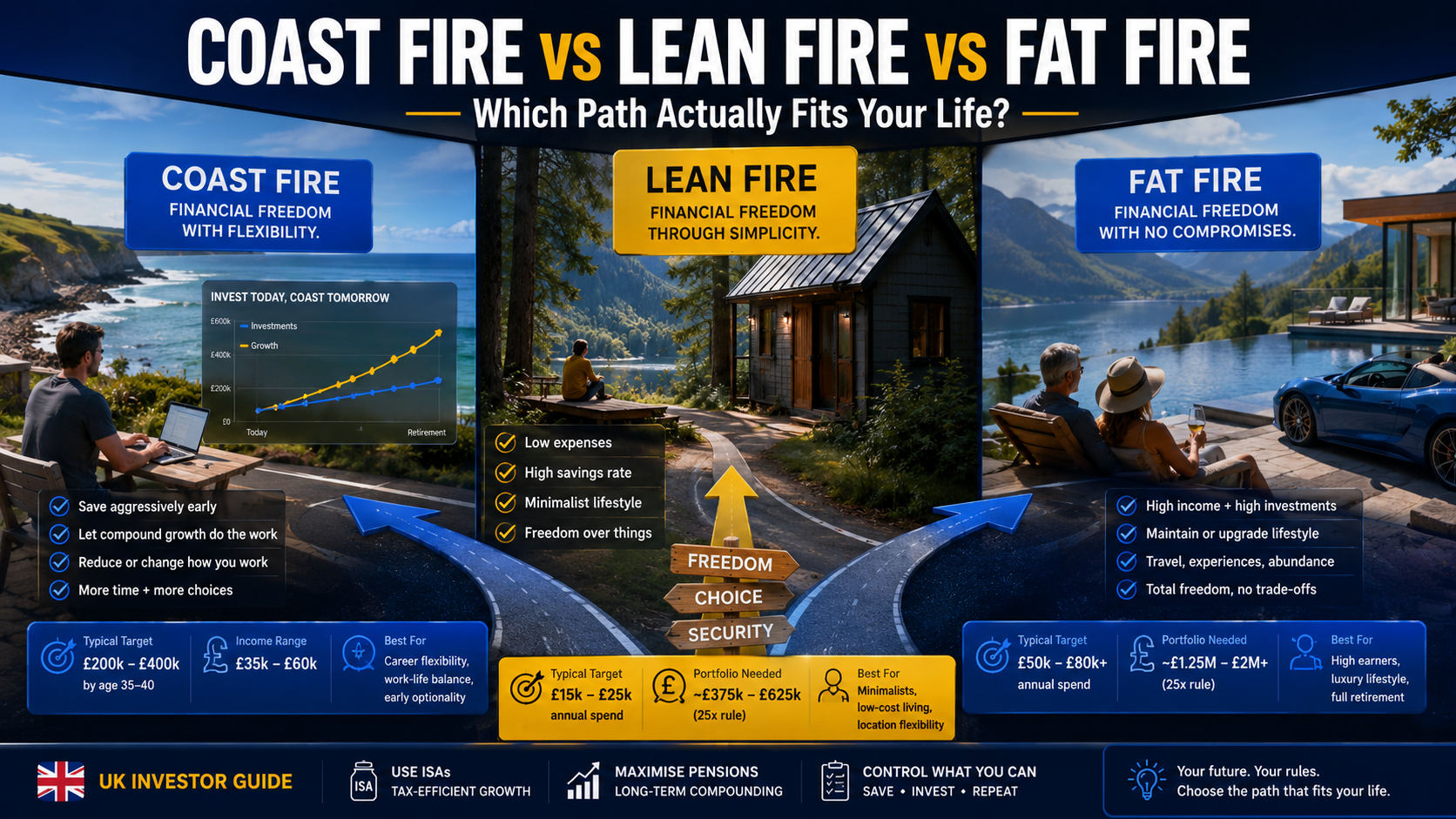
Lean FIRE.
Lean FIRE focuses on achieving financial independence with a relatively modest lifestyle and lower spending requirements.
This approach typically requires the smallest investment portfolio but often involves stricter budgeting.
Traditional FIRE.
Traditional FIRE aims to build sufficient investments to support a comfortable lifestyle without needing employment income.
This remains the most common FIRE goal.
Fat FIRE.
Fat FIRE is designed for those who want greater spending flexibility and a more luxurious retirement lifestyle.
This usually requires a much larger investment portfolio and often higher earnings during working years.
Coast FIRE.
Coast FIRE occurs when someone has invested enough that future growth alone is expected to fund retirement, even if no additional contributions are made.
This approach allows greater flexibility later in life.
The FIRE Mindset Matters More Than The Numbers.
While spreadsheets and calculators receive plenty of attention, the mindset behind FIRE is arguably even more important.
The movement encourages people to become intentional with money.
Instead of spending automatically, FIRE followers often ask:
- Does this purchase genuinely improve my life?
- Am I spending according to my values?
- Could this money help create future freedom?
This shift in thinking often leads to improved financial habits, regardless of whether someone ultimately retires early.
Many people discover that financial independence is as much about reducing stress and increasing options as it is about leaving work.
Common Challenges Facing UK FIRE Seekers.
Achieving FIRE is not without obstacles.
Housing costs remain a major challenge across much of the UK, particularly in London and the South East.
Inflation can also affect spending plans and long-term investment projections.
Retirement preparedness remains an issue nationally. Recent pension research suggests around 15 million UK workers may not be saving enough for retirement, while millions more are not contributing at all.
The self-employed face additional challenges. Reports indicate that only around 17% to 20% of self-employed workers are actively saving into pensions, leaving many vulnerable to financial shortfalls later in life.
These statistics highlight why building financial independence has become increasingly important for many households.
Practical First Steps Towards FIRE.
If you're interested in FIRE, there is no need to make dramatic changes overnight.
Start with the fundamentals:
Build an emergency fund covering several months of expenses.
Track where your money goes each month.
Pay off high-interest debt.
Maximise workplace pension contributions where possible.
Use ISA allowances efficiently.
Begin investing regularly into diversified funds.
Increase your savings rate gradually over time.
Consistency matters far more than perfection.
Even small monthly investments can grow significantly over decades through the power of compounding.
Why FIRE Is About Freedom.
The biggest misconception about FIRE is that it is only about retiring early.
In reality, FIRE is about creating options.
For some people, that means leaving work permanently. For others, it means working fewer hours, spending more time with family, travelling, volunteering or pursuing meaningful projects without financial pressure.
The ultimate goal is not necessarily to stop working. It is to reach a point where work becomes a choice rather than a necessity.
In a world where financial uncertainty remains a concern for many households, that freedom can be one of the most valuable assets anyone can build.
Want help getting started? Subscribe today and receive your free copy of the Investing for Beginners Handbook packed with practical tips for building long-term wealth.