One of the biggest questions in personal finance is surprisingly simple: how much money do you actually need to retire comfortably in the UK?
The answer is rarely a single number. Your lifestyle, housing situation, health, family commitments and retirement goals all play a role. However, there is one rule that has become increasingly popular among financial independence and retirement planners because it provides a practical starting point.
It is known as the 25x rule.
Instead of focusing on an arbitrary pension pot target, the 25x rule starts with something far more important: how much you expect to spend each year in retirement. Once you know that figure, you can estimate the size of investment portfolio needed to support it.
For many people, the results are both eye-opening and reassuring.
What Is The 25x Rule.
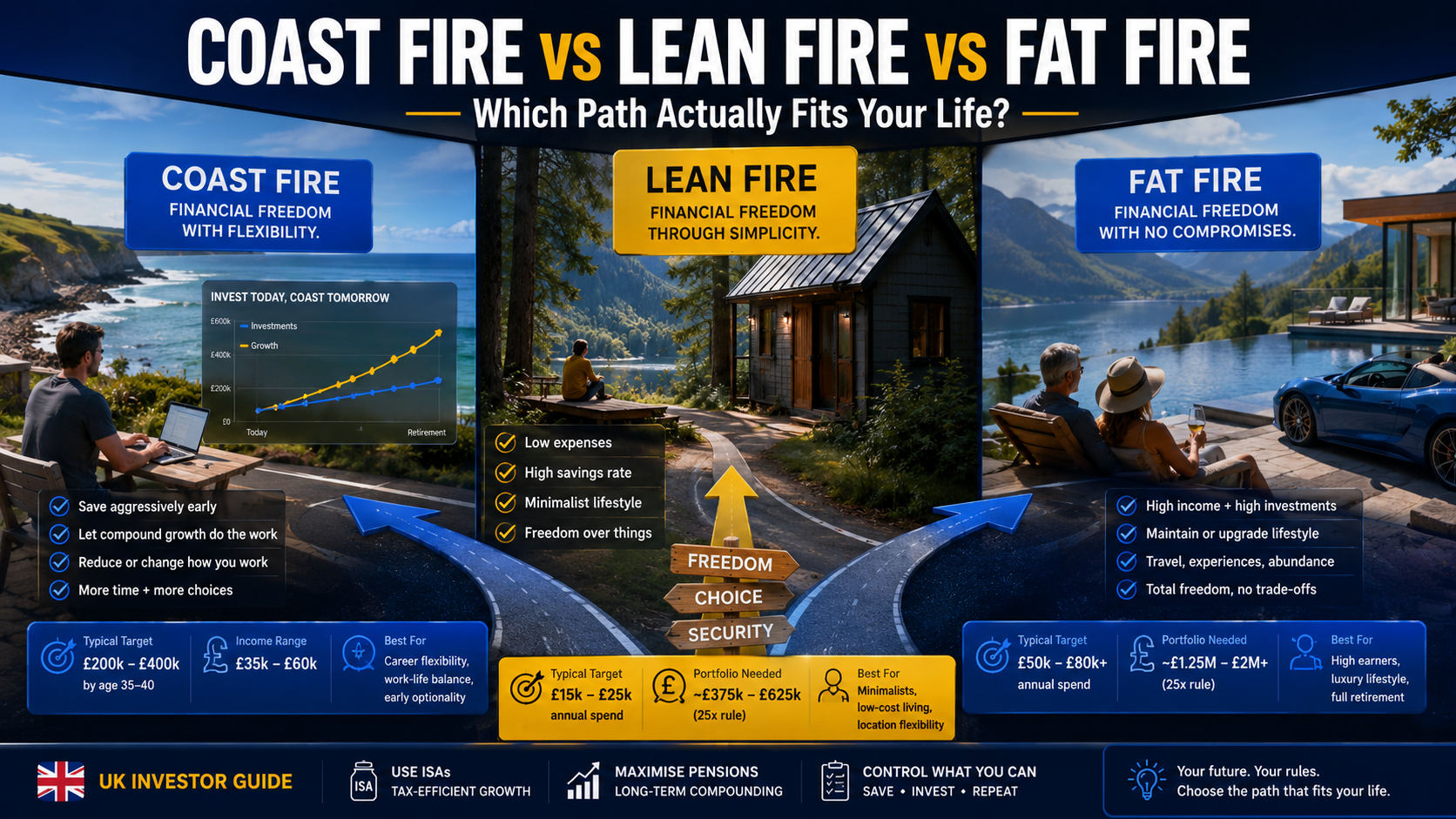
The 25x rule suggests that you need approximately 25 times your annual spending invested to support a long-term retirement.
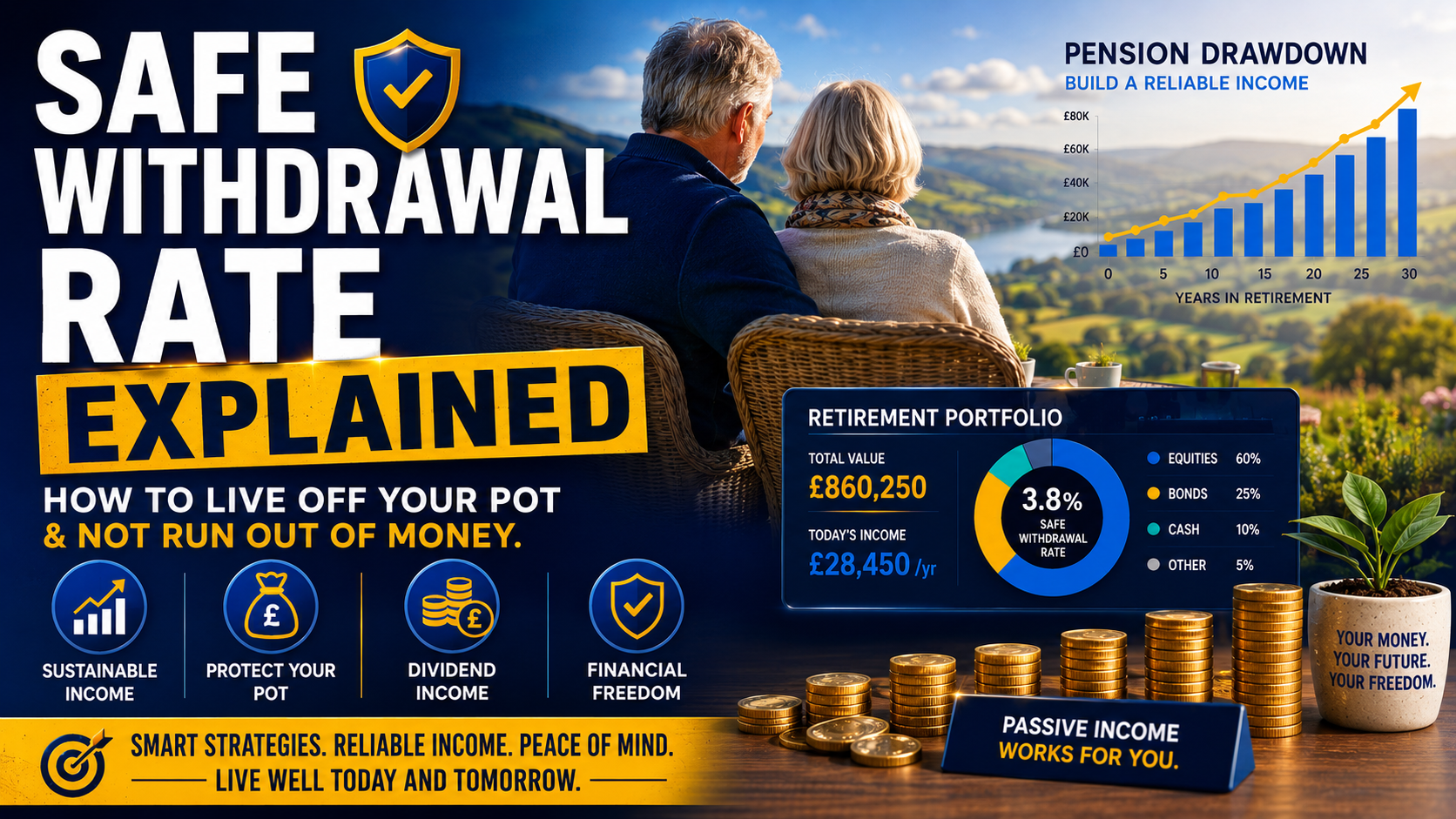
The rule is closely linked to the well-known 4% withdrawal rule. The idea is that withdrawing around 4% of your portfolio each year provides a reasonable chance of sustaining your retirement income over several decades.
For example:
- £20,000 annual spending = £500,000 portfolio
- £30,000 annual spending = £750,000 portfolio
- £40,000 annual spending = £1 million portfolio
- £50,000 annual spending = £1.25 million portfolio
The key point is that retirement planning should start with spending rather than income.
Many people focus on building the biggest pension possible without first considering what they actually need that money to fund.
How Much Do Retirees Actually Spend In The UK.
Recent UK research suggests that many retirees spend significantly less than people expect.
According to research from Quilter and the Centre for Economics and Business Research, UK retirees spend an average of approximately £22,140 per year. Housing, groceries, holidays and energy costs account for the largest share of spending.
Using the 25x rule, that level of expenditure would require a portfolio worth around £553,500.
That figure may appear more achievable than the million-pound targets often discussed in retirement headlines.
However, averages only tell part of the story. Your own retirement could be far more expensive if you plan to travel extensively, support family members or maintain a higher standard of living.
The Retirement Lifestyle Gap.
One reason retirement planning can feel confusing is that different people define a comfortable retirement very differently.
Some retirees are perfectly happy spending their time gardening, socialising locally and enjoying modest holidays. Others dream of multiple overseas trips each year, dining out regularly and pursuing expensive hobbies.
Research from Royal London found that the average worker would like retirement income of nearly £49,000 annually but is on track to fall short by around £12,000 per year.
This highlights an important reality. Many people are saving towards an ideal retirement without fully understanding whether their current pension contributions are sufficient.
The State Pension Is Helpful But Not Enough.
For most retirees, the State Pension forms an important part of retirement income.
The full new State Pension is worth just under £12,000 annually in 2025. While this provides a valuable foundation, it is unlikely to cover all living expenses for most households.
Suppose you expect to spend £30,000 per year in retirement.
If your State Pension provides approximately £12,000, you only need your investments to generate the remaining £18,000.
Using the 25x rule, you would require roughly £450,000 invested rather than the £750,000 needed to generate the full £30,000 independently.
This distinction is often overlooked and can make retirement targets appear far more realistic.
Why Spending Matters More Than Salary.
Many traditional retirement calculations focus on replacing a percentage of your salary.
The UK Government's retirement adequacy analysis suggests that a median earner may need around 67% of their pre-retirement earnings to maintain a similar lifestyle.
However, spending often changes dramatically after retirement.
Commuting costs disappear. Mortgage payments may end. Work clothing expenses decline. On the other hand, travel, leisure activities and healthcare costs may increase.
This is why understanding your future spending habits is far more useful than simply targeting a percentage of your current income.
The Hidden Cost That Many Retirees Forget.
One of the biggest retirement planning mistakes is failing to account for inflation.
Even relatively modest inflation can dramatically reduce purchasing power over time.
A retirement lasting 25 to 30 years may see significant changes in prices, especially for essentials such as energy, food and healthcare.
Fortunately, investing in diversified stock market funds has historically provided growth that outpaces inflation over long periods, although future returns can never be guaranteed.
This is one reason many financial independence advocates continue holding equities throughout retirement rather than moving entirely into cash.
What If You Want To Retire Early.
The 25x rule is often associated with the FIRE movement, which stands for Financial Independence, Retire Early.
For people hoping to retire in their 50s or even 40s, the calculation becomes slightly more complicated because their money needs to last longer.
Someone retiring at 45 may require income for 40 years or more.
In these cases, some investors prefer more conservative withdrawal rates of 3% to 3.5%, which effectively means saving closer to 30 to 33 times annual spending.
For example:
- £30,000 annual spending at 25x = £750,000
- £30,000 annual spending at 33x = £990,000
While the numbers are larger, the principle remains identical. Control spending and invest consistently.
The Average Pension Pot Reality.
Retirement planning statistics reveal a significant gap between aspiration and reality.
According to PensionBee data, the average UK pension pot stood at approximately £21,875 in 2025.
That figure highlights why relying solely on average pension statistics can be misleading.
Many individuals have multiple pensions, property wealth or ISA investments outside their pension arrangements. Others are still decades away from retirement and have plenty of time for compound growth to work in their favour.
What matters most is understanding your own target rather than comparing yourself to national averages.
A Simple Retirement Calculation.
If you want a quick estimate of your own retirement target, try this simple exercise.
First, estimate your annual retirement spending.
Next, subtract any guaranteed income sources such as the State Pension or defined benefit pensions.
Finally, multiply the remaining figure by 25.
Example:
- Annual spending target: £35,000
- State Pension income: £12,000
- Required investment income: £23,000
- Portfolio target: £575,000
This simple calculation will not replace professional financial advice, but it provides a useful benchmark for assessing progress.
Why Retirement Planning Is More Achievable Than Many People Think.
Retirement headlines often focus on million-pound pension pots, creating the impression that financial independence is unattainable.
Yet many UK retirees live comfortably on significantly less than that.
Research suggests the median retiree household income is around £35,000, while average spending is considerably lower.
The real challenge is not necessarily earning a huge salary. It is consistently investing over decades, controlling lifestyle inflation and understanding the relationship between spending and wealth.
The 25x rule offers a simple framework that cuts through much of the complexity.
Rather than asking how much money everyone else has, you can focus on the number that matters most: the amount required to fund your own ideal retirement.
Want help taking your first investing steps? Subscribe and get a free copy of our Investing for Beginners Handbook packed with practical tips to help you start building long-term wealth today.
Keep reading: ISA or Pension for Early Retirement? How to Bridge the Gap to 57.