Every tax year, millions of UK savers and investors are given a valuable opportunity to protect their money from tax. Yet many fail to take full advantage of it.
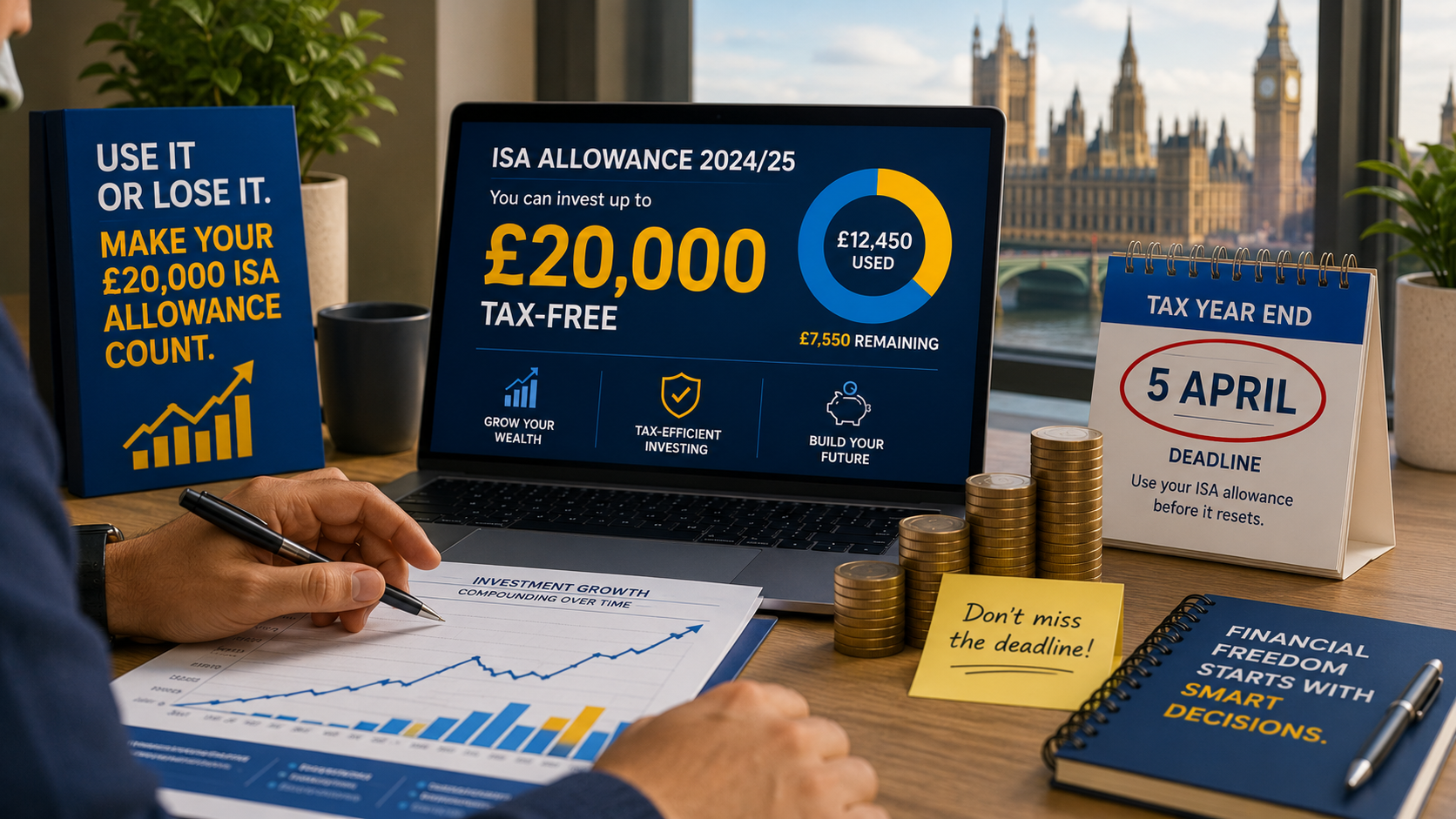
The Individual Savings Account, better known as an ISA, allows eligible UK adults to save or invest up to £20,000 each tax year without paying tax on interest, dividends, or capital gains. The catch is simple. If you do not use your allowance before the tax year ends on 5 April, you lose it forever.
Unlike pension allowances, unused ISA allowances cannot be carried forward. Once the clock strikes midnight and the new tax year begins on 6 April, any remaining allowance disappears and a fresh £20,000 allowance replaces it.
For anyone looking to build wealth tax-efficiently, understanding how to maximise your ISA allowance before the deadline could make a significant difference over the long term.
Why the ISA deadline matters.
The ISA allowance operates on a strict use-it-or-lose-it basis. Every UK tax year runs from 6 April to 5 April the following year, and investors have until the final day of the tax year to use their available allowance.
This deadline creates a surge in interest every year between January and April as savers rush to make last-minute contributions.
According to HMRC data, UK adults contributed a record £103 billion into ISAs during the 2023/24 tax year across approximately 15 million accounts, highlighting the growing importance of tax-efficient saving and investing.
The challenge is that many people wait until the final weeks of the tax year before reviewing their finances, only to discover they have unused ISA capacity that cannot be recovered once the deadline passes.
How the £20,000 ISA allowance works.
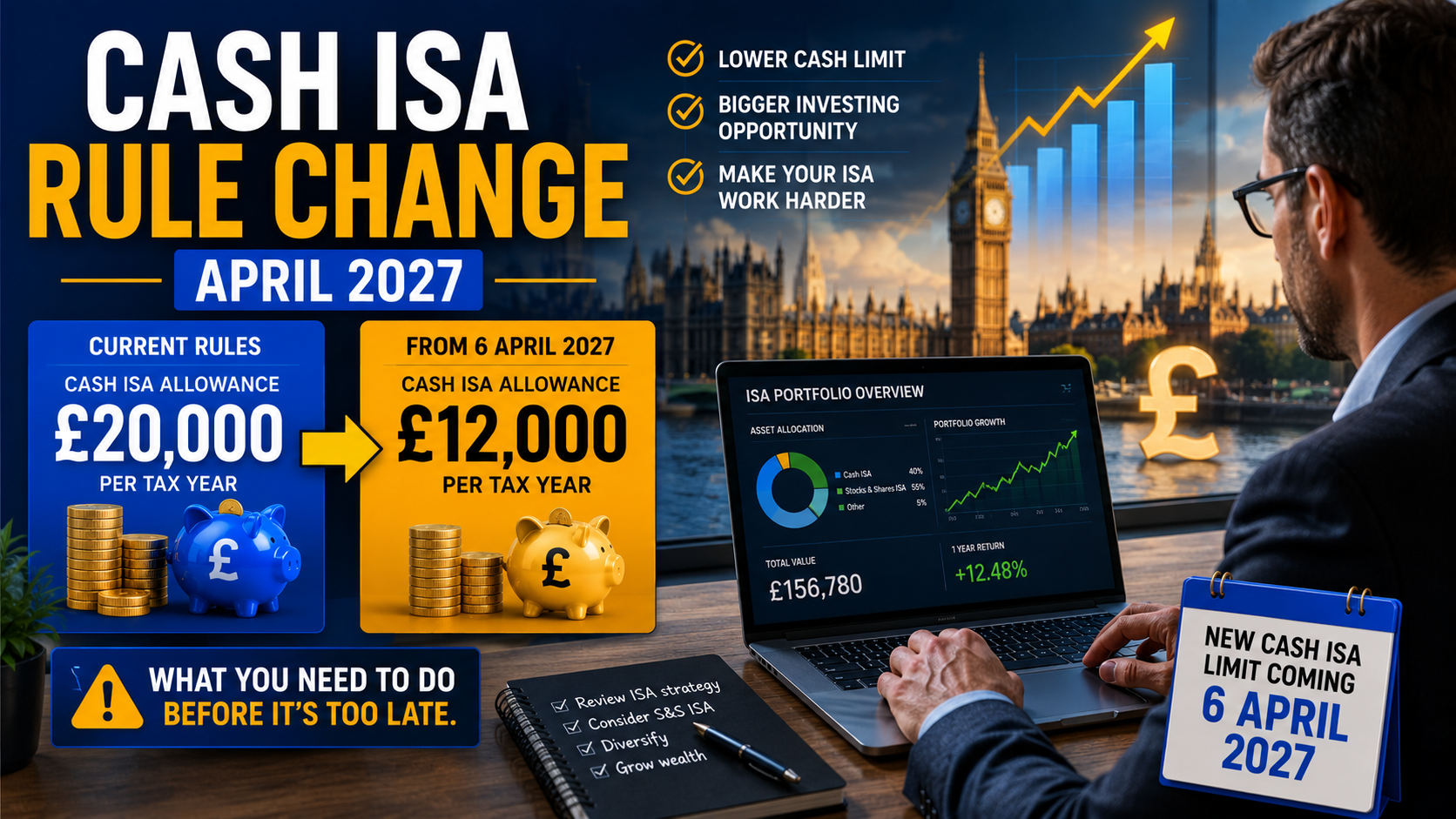
The current ISA allowance allows you to contribute up to £20,000 across eligible ISA products during a single tax year.
You can split the allowance between different types of ISAs, including:
- Cash ISAs.
- Stocks and Shares ISAs.
- Lifetime ISAs.
- Innovative Finance ISAs.
The total amount contributed across all accounts cannot exceed £20,000 during the tax year.
For example, someone could place £5,000 into a Cash ISA and £15,000 into a Stocks and Shares ISA. Alternatively, they may choose to invest the entire £20,000 into a single ISA product.
Importantly, any unused allowance expires at the end of the tax year and cannot be rolled over into future years.
The long-term cost of not using your allowance.
Many investors focus on the immediate tax savings provided by an ISA, but the real value comes from years of tax-free compounding.
Every pound invested within an ISA can grow free from capital gains tax and dividend tax, potentially creating a substantial tax shelter over time.
Industry analysis suggests that only around 22.7% of Stocks and Shares ISA subscribers fully utilise their annual £20,000 allowance.
This means the vast majority of investors are leaving part of their available tax-efficient investing capacity unused each year.
While not everyone can afford to contribute the full allowance, even smaller contributions can have a significant impact when invested consistently over many years.
For example, investing £5,000 annually inside an ISA and achieving average long-term market growth could result in a substantial portfolio over several decades, all sheltered from future investment taxes.
Cash ISA or Stocks and Shares ISA.
One of the biggest decisions facing savers before the deadline is whether to use a Cash ISA or a Stocks and Shares ISA.
Cash ISAs have experienced a resurgence in popularity due to higher interest rates. HMRC figures show that cash ISA subscriptions surged significantly during the 2023/24 tax year, with nearly £70 billion flowing into cash products.
Cash ISAs offer certainty and security, making them attractive for emergency funds or short-term savings goals.
Stocks and Shares ISAs, however, provide access to investments such as index funds, ETFs, investment trusts, and individual shares. While investment values can fall as well as rise, many investors use them to pursue higher long-term returns.
Research comparing long-term performance suggests investors who consistently invested through Stocks and Shares ISAs over the past decade significantly outperformed equivalent cash savings.
The right choice depends on your objectives, risk tolerance, and investment timeframe.
Practical ways to maximise your ISA allowance before the deadline.
If you still have unused allowance available, there are several practical strategies worth considering.
The first is simply reviewing your current ISA contributions. Many people underestimate how much unused allowance remains because they have contributed sporadically throughout the year.
A second option is to transfer cash held in standard savings accounts into an ISA before the deadline. This can immediately increase the amount of money protected from future taxation.
Investors may also consider topping up existing Stocks and Shares ISA holdings rather than leaving money in taxable investment accounts.
Some individuals choose to make a lump-sum contribution before the deadline, while others establish regular monthly contributions for the following tax year to avoid last-minute decisions in future.
The key is acting before the tax year ends.
ISA millionaires show the power of consistency.
One of the most fascinating ISA statistics is the growing number of ISA millionaires in the UK.
Recent data suggests there are now more than 5,000 ISA millionaires nationwide, demonstrating how long-term investing and consistent use of annual allowances can create substantial wealth.
These investors did not necessarily become wealthy overnight.
Many built their portfolios gradually by maximising annual allowances over many years, reinvesting dividends, and remaining invested through market cycles.
While reaching seven figures may not be realistic for everyone, the principle remains the same. Consistently using available ISA allowances can significantly improve long-term financial outcomes.
New ISA flexibility gives savers more options.
Recent rule changes have introduced greater flexibility for ISA savers.
Investors can now contribute to multiple ISAs of the same type within a tax year, making it easier to switch providers and take advantage of competitive rates or investment platforms.
This means savers are no longer tied to a single provider for each ISA category during the tax year.
The increased flexibility may help consumers optimise returns while still staying within the overall £20,000 annual allowance.
However, keeping accurate records remains important to ensure total contributions do not exceed the annual limit.
Why delaying could become costly.
Waiting until the final days before the deadline can create unnecessary risks.
Some providers require time to process contributions, particularly during periods of high demand. Technical issues, bank transfer delays, or account verification checks could result in funds missing the deadline.
Leaving decisions until the final week can also increase the likelihood of rushed investment choices.
By reviewing your ISA position early, you give yourself time to compare providers, evaluate investment options, and ensure contributions are completed before the tax year ends.
For anyone serious about tax-efficient investing, the weeks leading up to 5 April should be viewed as an opportunity rather than an administrative deadline.
Make every year count.
The annual ISA allowance remains one of the most generous tax-saving opportunities available to UK savers and investors.
With a £20,000 allowance available each year, the ability to build a growing portfolio free from income tax, dividend tax, and capital gains tax can deliver significant benefits over time.
The important thing to remember is that the allowance disappears once the tax year ends.
Whether you choose a Cash ISA, a Stocks and Shares ISA, or a combination of both, using as much of your available allowance as possible before 5 April could help strengthen your financial future and reduce your future tax burden.
As the deadline approaches, now may be the ideal time to review your finances and ensure you are not leaving valuable tax-efficient investing opportunities behind.
Want to build wealth more tax-efficiently? Subscribe now and get our free eBook, UK Tax-Efficient Investing Playbook, delivered straight to your inbox.