Most investors spend decades focusing on how much they can accumulate for retirement. However, once retirement begins, a different threat emerges. It is known as sequence of returns risk, and it can have a far greater impact on retirement outcomes than many people realise.
The concept is surprisingly simple. When you are still working and contributing to investments, market downturns can often be weathered because you continue buying assets at lower prices. In retirement, the situation changes. You are withdrawing money instead of contributing it. If a market crash occurs during the first few years of retirement, the combination of falling asset values and ongoing withdrawals can permanently damage a pension portfolio.
For UK retirees using pension drawdown, understanding sequence of returns risk is becoming increasingly important. With more people taking responsibility for their own retirement income following pension freedoms, this overlooked risk deserves far more attention.
What Is Sequence Of Returns Risk.
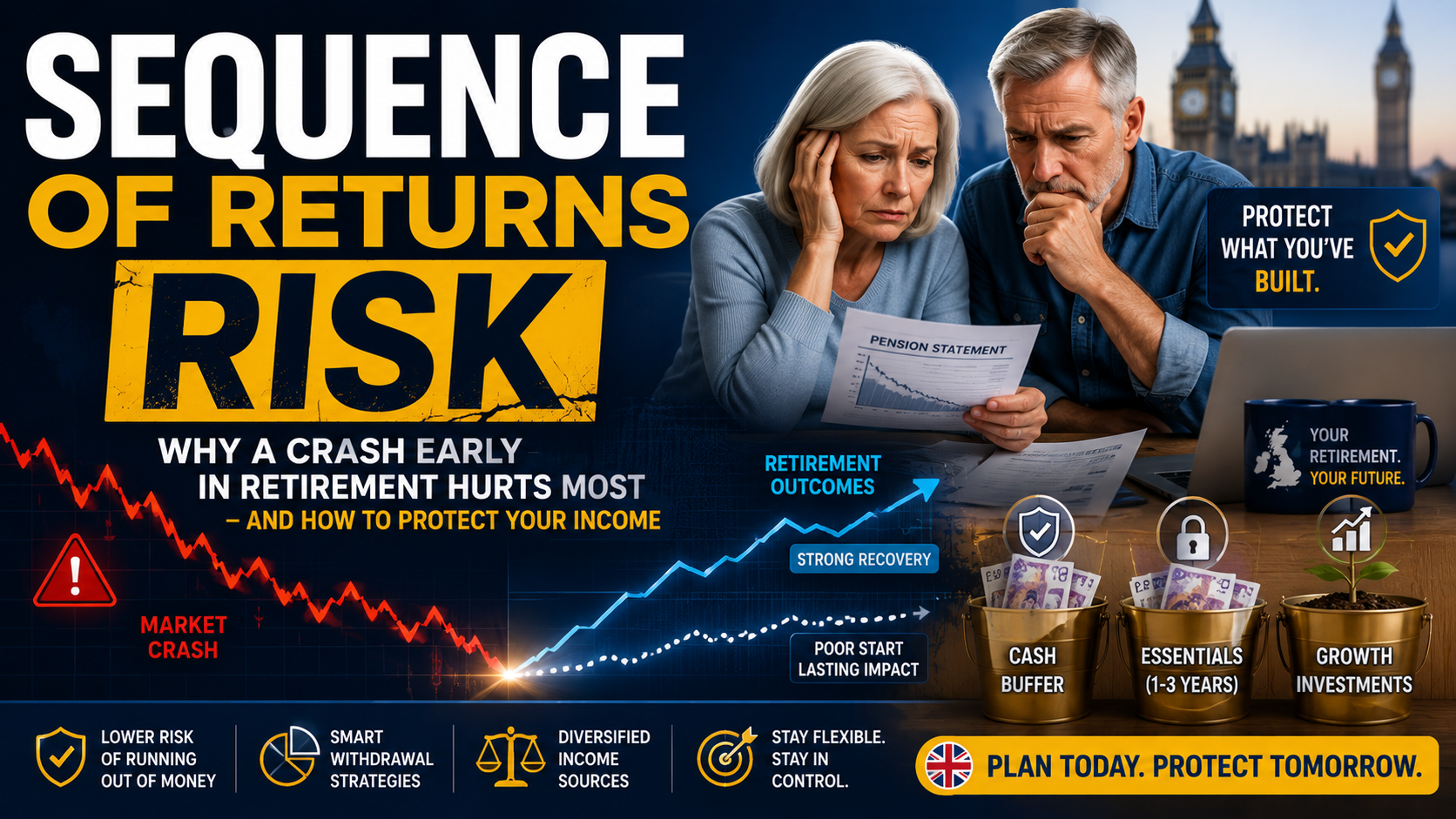
Sequence of returns risk refers to the danger that poor investment returns occur early in retirement when withdrawals are being made from a portfolio.
The key point is that two retirees can achieve the exact same average annual return over retirement and still end up with dramatically different outcomes. The order in which those returns occur matters.
Imagine two retirees each start with a £500,000 pension pot and withdraw £25,000 per year. Both achieve an average return of 5% annually over twenty years. One experiences strong market growth in the first decade and weaker returns later. The other suffers losses early and gains later.
Research and retirement modelling consistently show that the retiree suffering losses early may run out of money years sooner despite achieving the same average return. Several UK pension studies have demonstrated how early losses can significantly reduce portfolio longevity.
This is why financial planners often describe the first five to ten years of retirement as the "retirement risk zone".
Why Early Losses Cause So Much Damage.
The mathematics behind sequence risk can be brutal.
When markets fall during retirement, retirees often continue taking withdrawals to cover living expenses. This means selling investments when prices are depressed.
Once those assets have been sold, they are no longer available to participate in any future market recovery.
For example, a portfolio that falls 20% from £500,000 to £400,000 is already under pressure. If the retiree withdraws £25,000 during that period, the remaining portfolio falls to £375,000. The next market recovery is then working from a much smaller base.
This creates a compounding effect that can permanently reduce retirement income sustainability.
The risk becomes even greater when withdrawals are high. Recent UK pension data shows that more than 220,000 pension pots were being withdrawn at rates above 8% annually, a level many experts consider potentially unsustainable over the long term.
Why This Matters More In The UK Today.
Sequence risk has become increasingly relevant for British retirees because pension drawdown has become far more common since the introduction of pension freedoms.
Rather than purchasing guaranteed annuities, many retirees now keep their pensions invested while drawing income directly from their portfolios. FCA retirement income data continues to show significant use of flexible drawdown arrangements across the UK retirement market.
At the same time, retirement periods are becoming longer. Many retirees may need their pension savings to last 25 to 35 years or more.
According to recent government-backed pension research, millions of Britons are already at risk of inadequate retirement savings, making portfolio sustainability even more important. The Pensions Commission recently warned that at least 15 million Britons may not be saving enough for retirement.
For retirees relying heavily on investment portfolios, sequence risk can become one of the greatest threats to long-term financial security.
Common Signs You May Be Vulnerable.
Not every retiree faces the same level of sequence risk.
Several factors can increase exposure significantly.
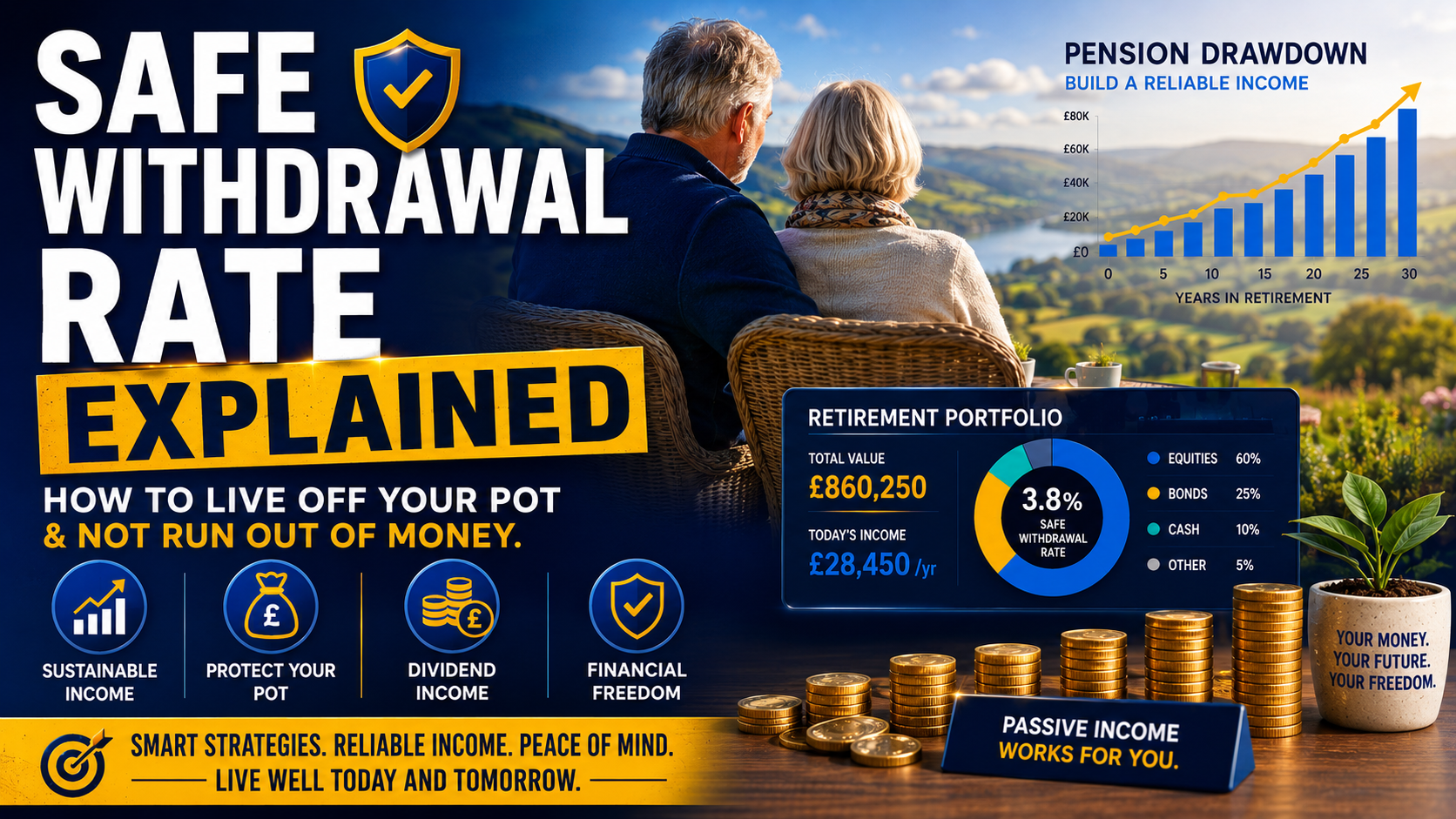
Retirees drawing more than 4% to 5% annually from their pension may face greater challenges if markets experience prolonged weakness. Some UK retirement analysts suggest sustainable withdrawal rates may be closer to 3.7% than the traditional 4% rule often cited in American studies.
A high allocation to equities can also increase volatility. While shares offer long-term growth potential, they can create larger short-term declines during market downturns.
Another warning sign is having little or no cash reserve. Without accessible cash, retirees may be forced to sell investments at precisely the wrong time.
Finally, retirees with limited flexibility in spending may struggle to reduce withdrawals when markets perform poorly.
Four Ways To Protect Against Sequence Risk.
Fortunately, sequence of returns risk can be managed. While it cannot be eliminated entirely, several strategies can significantly reduce its impact.
Maintain A Cash Buffer.
Many financial planners recommend holding one to three years of expected spending in cash or near-cash assets.
This reserve can be used during market downturns, allowing retirees to avoid selling investments after major declines.
The approach helps create breathing room while markets recover.
Use Flexible Withdrawals.
Instead of withdrawing the same inflation-adjusted amount every year regardless of market conditions, some retirees adopt flexible spending rules.
During strong market years, withdrawals can increase modestly. During weaker periods, discretionary spending can be reduced temporarily.
Even small adjustments can have a significant positive impact on portfolio longevity.
Diversify Across Asset Classes.
Diversification remains one of the most effective risk management tools available.
A portfolio containing a mixture of equities, bonds, cash, and alternative assets may experience lower volatility than a portfolio invested entirely in shares.
While diversification cannot prevent losses, it may reduce the severity of drawdowns during market stress.
Consider A Bucket Strategy.
The bucket approach has gained popularity among retirees concerned about sequence risk.
This strategy divides retirement assets into separate pools.
The first bucket contains cash for immediate spending needs. The second holds lower-risk investments for medium-term spending. The third bucket remains invested for long-term growth.
This structure can help retirees avoid selling growth assets during market downturns. Financial experts frequently highlight this strategy as one of the more practical defences against sequence risk.
The Hidden Psychological Challenge.
One reason sequence risk catches retirees off guard is that it feels counterintuitive.
Most investors spend decades focusing on average returns. Financial headlines often discuss long-term market performance and annual returns.
However, retirement is not simply about averages. Timing matters.
A retiree experiencing a 25% market decline in their first year may feel pressure to make emotional decisions. Fear can lead to panic selling, while anxiety about running out of money may cause unnecessary changes to investment strategy.
Having a clear retirement income plan before market volatility strikes can help reduce emotional decision-making during difficult periods.
Building A Retirement Plan That Can Survive Market Shocks.
The reality is that no retiree can predict exactly when the next market crash will occur.
What investors can control is preparation.
Maintaining sensible withdrawal rates, building cash reserves, diversifying investments and remaining flexible with spending can dramatically improve resilience during difficult market conditions.
Sequence of returns risk may not receive as much attention as inflation or stock market performance, but it has the potential to cause lasting damage if ignored.
For retirees using pension drawdown, understanding this risk could be the difference between a retirement plan that survives market turbulence and one that struggles to recover from an unfortunate start.
By planning ahead and building safeguards into a retirement income strategy, investors can improve their chances of enjoying a secure and sustainable retirement regardless of what markets do next.
Want to build your investing knowledge from the ground up? Subscribe today and receive our free eBook, Investing for Beginners Handbook, packed with practical investing insights for new investors.
Keep reading: What Is FIRE? The UK Guide to Financial Independence, Retire Early, ISA or Pension for Early Retirement? How to Bridge the Gap to 57 and Stocks and Shares ISA Explained in Plain English (2026/27): A Beginner's Guide to Tax-Free Investing.