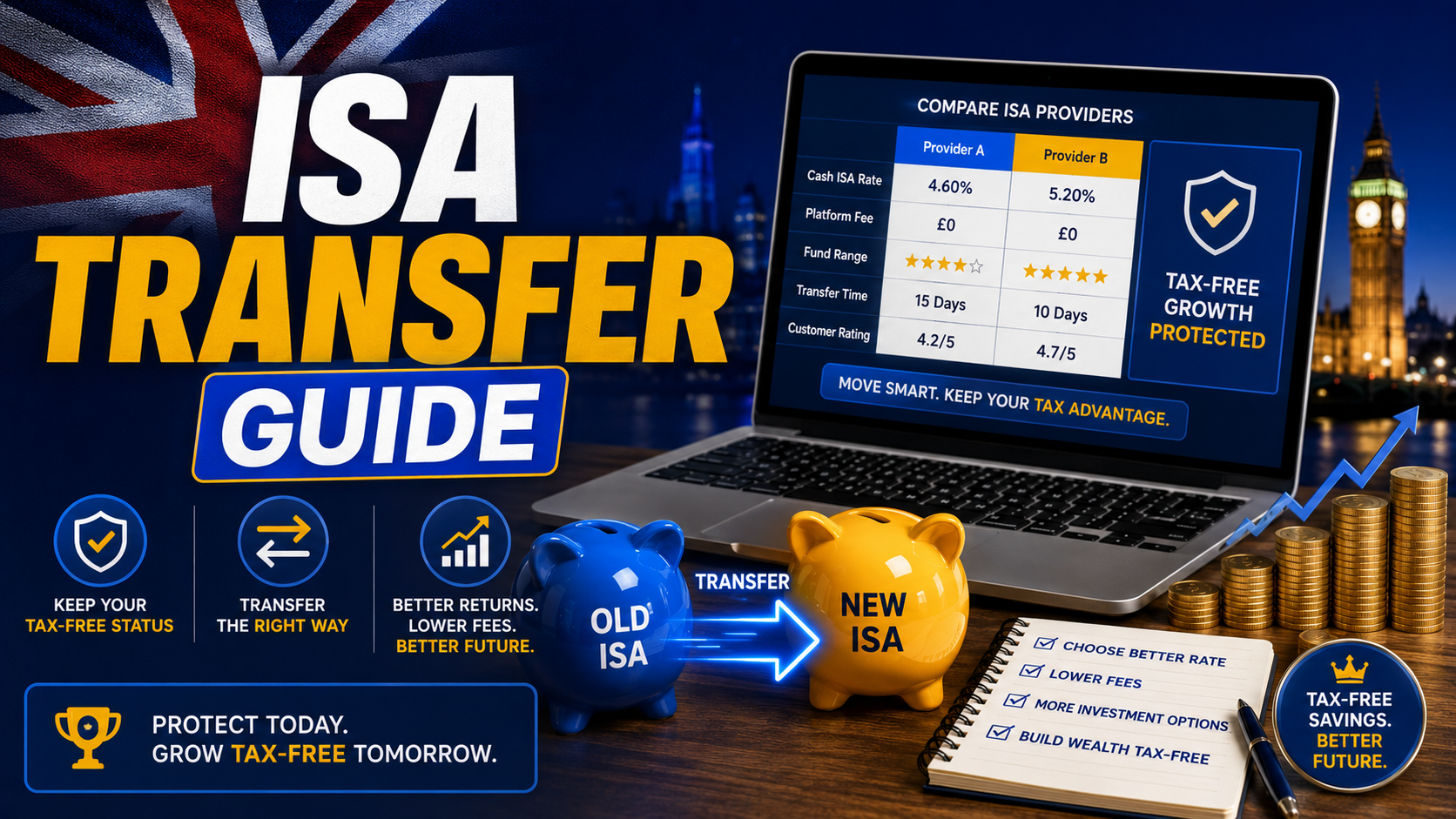
Moving your ISA to a new provider can be one of the smartest financial decisions you make. Whether you are looking for a better interest rate, lower investment fees, improved platform features, or a wider range of investment options, transferring your ISA allows you to keep your tax advantages while potentially improving your long-term returns.
However, many savers and investors still make avoidable mistakes when switching providers. A simple error can result in losing valuable tax benefits, reducing your annual allowance, or creating unnecessary delays.
The good news is that transferring an ISA correctly is straightforward when you understand the rules. This guide explains exactly how to transfer an ISA without losing your tax-free status, the common mistakes to avoid, and what UK investors should know before making the switch.
Why More UK Savers Are Transferring Their ISAs.
ISA usage continues to grow across the UK as more people seek tax-efficient ways to save and invest. According to HMRC's latest savings statistics, around 15 million adult ISA accounts received contributions during the 2023/24 tax year, up significantly from the previous year. Total ISA subscriptions reached a record £103 billion, highlighting the continued popularity of tax-free savings and investments.
The overall value of ISA holdings has also reached record levels. HMRC data shows the total market value of adult ISA assets rose to approximately £872 billion by April 2024.
With so much money held inside ISAs, it is no surprise that investors are increasingly shopping around for better rates, lower fees, and stronger investment platforms.
What Happens During an ISA Transfer.
An ISA transfer allows you to move money from one ISA provider to another without withdrawing the funds yourself.
This is important because ISA transfers preserve the tax-free wrapper around your savings and investments. As long as the transfer follows HMRC rules, you continue to benefit from tax-free interest, dividends, and capital gains.
HMRC requires ISA managers to offer customers the ability to transfer their ISA to another provider. Cash ISAs can generally be transferred to another Cash ISA or into a Stocks and Shares ISA, while Stocks and Shares ISAs can be transferred to another Stocks and Shares ISA provider.
The process is handled between providers, which helps maintain your tax-efficient status throughout the transfer.
How to Transfer an ISA Correctly.
The first step is choosing your new ISA provider. Compare interest rates, platform fees, investment options, customer service ratings, and any promotional offers available.
Once you have selected a provider, open the new ISA account if required. Most providers will ask whether you want to transfer an existing ISA during the application process.
You will then complete an ISA transfer form supplied by the new provider. This form authorises the new provider to contact your existing ISA manager and arrange the transfer on your behalf.
The key point is that the money should never pass through your personal bank account.
Once submitted, the providers coordinate the transfer directly. Cash ISA transfers are often completed within a few weeks, while Stocks and Shares ISA transfers can take longer due to the need to sell and transfer investments or re-register holdings.
Can You Transfer Current Year ISA Contributions?
Yes, but special rules apply.
If you transfer an ISA that contains contributions made during the current tax year, you must usually transfer the entire current year's subscription amount to the new provider.
For previous tax years, you can often choose to transfer all or part of the balance depending on the provider's rules.
Understanding this distinction helps avoid accidentally breaching HMRC regulations.
The Biggest ISA Transfer Mistake to Avoid.
The most common mistake is withdrawing money yourself and then attempting to pay it into a new ISA.
This is not considered an ISA transfer.
Instead, HMRC treats the withdrawal as removing funds from the ISA wrapper entirely. If you then deposit the money into a new ISA, it may count as a fresh contribution and could use part or all of your annual ISA allowance.
In some situations, this could even prevent you from moving the full balance if you have already used much of your allowance for the year.
Always use the official ISA transfer process provided by your new provider.
Other Common ISA Transfer Mistakes.
Several other mistakes can create complications.
One common issue is failing to check whether the new provider accepts transfers. While many providers do, some have restrictions on specific ISA types.
Another mistake is focusing solely on headline interest rates while ignoring platform fees. Investors transferring Stocks and Shares ISAs should carefully review dealing costs, account charges, and fund fees before switching.
Some investors also forget to check whether they will be out of the market during the transfer process. If investments are sold before transfer, market movements during the transfer period could affect overall returns.
Understanding how your chosen provider handles investment transfers can help minimise this risk.
Cash ISA Versus Stocks and Shares ISA Transfers.
Cash ISA transfers are generally straightforward because only cash balances move between providers.
Stocks and Shares ISA transfers can be more complex.
Some providers offer "cash transfers" where investments are sold before being moved. Others offer "in specie" transfers, which allow investments to move without being sold.
An in specie transfer can help investors remain invested throughout the process and avoid missing potential market gains.
Before transferring, check which transfer method is available and whether any fees apply.
How Long Does an ISA Transfer Take?
Transfer times vary depending on the type of ISA and the providers involved.
Cash ISA transfers are often completed within 15 business days, while Stocks and Shares ISA transfers can take several weeks longer, especially when investments need to be sold or re-registered.
Delays are not uncommon, particularly during busy periods such as the end of the tax year when many investors review their ISA arrangements.
Starting the process early can help avoid frustration.
Why ISA Transfers Can Improve Long-Term Returns.
Many investors underestimate the impact of fees and interest rates over time.
A seemingly small difference in platform charges or investment costs can have a significant impact on long-term wealth accumulation.
For cash savers, moving from a lower-paying ISA to a higher-rate provider can generate hundreds or even thousands of pounds in additional tax-free interest over the years.
For investors, lower fees and better investment choices can help maximise compounding returns.
This is especially important given the scale of ISA assets in the UK. Stocks and Shares ISAs currently account for more than half of all ISA wealth, reflecting the growing role of long-term investing in tax-efficient financial planning.
Questions to Ask Before Transferring.
Before initiating an ISA transfer, consider the following questions:
- Does the new provider accept transfers?
- Are there any exit fees from your current provider?
- Will investments be sold or transferred directly?
- What fees will apply after the transfer?
- Does the provider offer the investments you want?
- How long is the transfer expected to take?
Taking time to compare providers carefully can help ensure the move genuinely improves your financial position.
Keeping Your ISA Tax Benefits Intact.
The ISA transfer system exists specifically to help savers and investors move providers without losing valuable tax benefits.
As long as you use the official transfer process and avoid withdrawing funds yourself, your ISA remains protected from income tax and capital gains tax throughout the move.
With UK ISA subscriptions reaching record levels and billions of pounds sitting inside tax-efficient accounts, ensuring your money is held with the right provider has never been more important. Whether you are chasing higher interest rates, lower fees, or better investment opportunities, transferring an ISA correctly can help your money work harder without sacrificing the tax advantages that make ISAs so valuable.
Want to build your wealth more tax-efficiently? Subscribe today and get your free copy of the UK Tax-Efficient Investing Playbook delivered straight to your inbox.