Cryptocurrencies are famous for their dramatic price swings. Bitcoin can rise thousands of pounds in a matter of weeks, only to lose a significant percentage of its value just as quickly. Stablecoins were created to solve that problem. Their purpose is simple. They aim to maintain a stable value, usually by being linked to a traditional currency such as the US dollar.
As stablecoins continue to grow in popularity, many investors are asking an important question: are stablecoins actually safe?
The answer is more complicated than many people realise. While stablecoins are designed to be less volatile than traditional cryptocurrencies, they still carry risks that investors should understand before putting their money into them.
What Is a Stablecoin?
A stablecoin is a type of cryptocurrency that is designed to maintain a stable value by being linked, or "pegged", to another asset.
Most stablecoins are pegged to the US dollar, meaning one stablecoin should always be worth approximately $1. Some stablecoins are linked to other currencies, commodities such as gold, or baskets of assets.
Popular examples include:
- Tether (USDT)
- USD Coin (USDC)
- Dai (DAI)
- PayPal USD (PYUSD)
Unlike Bitcoin or Ethereum, which can experience significant price fluctuations, stablecoins are intended to act as a bridge between traditional finance and the cryptocurrency market.
Today, the stablecoin market is worth more than $300 billion globally, making it one of the largest sectors within the digital asset industry.
How Do Stablecoins Maintain Their Value?
There are several different types of stablecoins, each using a different method to maintain stability.
Fiat-Backed Stablecoins.
The most common type is a fiat-backed stablecoin.
These issuers claim to hold cash, government bonds, or other highly liquid assets that match the value of the stablecoins in circulation. For example, if a company issues one billion stablecoins, it should theoretically hold one billion dollars worth of reserves.
USDT and USDC are the largest examples of this model.
Crypto-Backed Stablecoins.
Some stablecoins use cryptocurrency as collateral instead of cash.
To compensate for crypto price volatility, these systems often require significantly more collateral than the value of the stablecoins issued.
DAI is one of the best-known examples.
Algorithmic Stablecoins.
Algorithmic stablecoins attempt to maintain their value through software rules and supply adjustments rather than traditional reserves.
While innovative in theory, this approach has proven risky in practice.
The collapse of TerraUSD in 2022 wiped out tens of billions of dollars and remains one of the most significant failures in cryptocurrency history.
Why Are Stablecoins Becoming So Popular?
Stablecoins solve several problems for cryptocurrency users.
First, they allow traders to move money between exchanges without converting back into traditional banking systems.
Second, they make international transfers faster and often cheaper than conventional payment networks.
Third, they provide a relatively stable place to store funds while remaining within the cryptocurrency ecosystem.
Institutional adoption has also accelerated. Major payment companies, financial institutions, and technology firms are increasingly exploring stablecoin technology for payments and settlements. Stablecoin transaction volumes have expanded rapidly over recent years, attracting growing attention from regulators and traditional financial firms.
The Biggest Risk - De-Pegging.
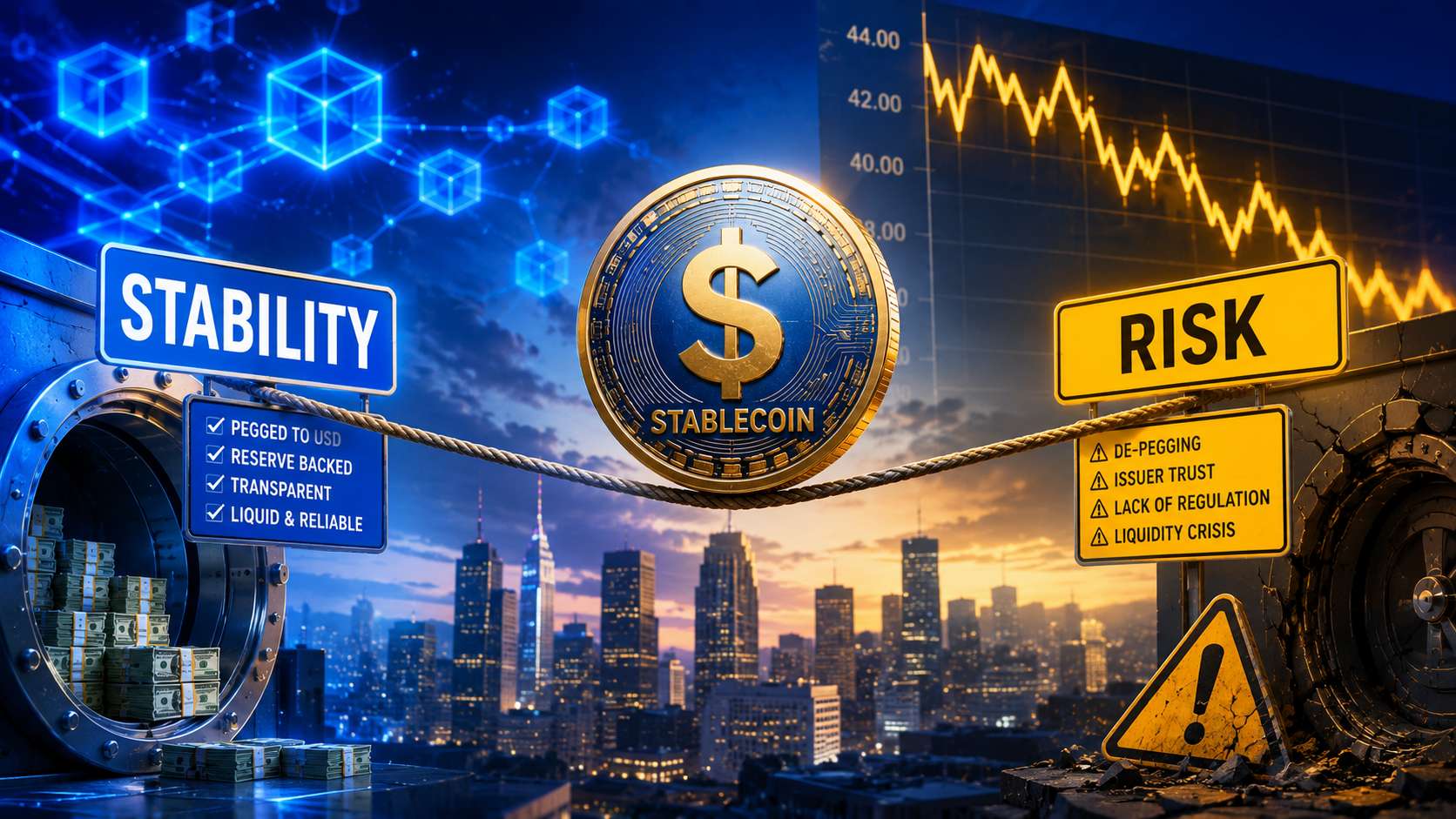
The biggest concern for most investors is de-pegging.
A de-peg occurs when a stablecoin loses its intended value and trades significantly above or below its target price.
While a few pence difference may seem minor, severe de-pegging events can result in substantial losses.
A famous example occurred in March 2023 when USDC briefly lost its dollar peg after reserves held at Silicon Valley Bank became temporarily inaccessible. Although the peg was eventually restored, the incident highlighted that even well-established stablecoins can face periods of instability.
More dramatic examples include TerraUSD, which collapsed entirely and never recovered.
A stablecoin's peg ultimately depends on confidence. If investors lose trust in the issuer or reserve backing, widespread selling can quickly create instability.
The Hidden Risk of Issuer Trust.
Many investors assume stablecoins are as safe as cash sitting in a bank account.
In reality, they are not.
When you hold a stablecoin, you are placing trust in the organisation behind it.
Investors must rely on the issuer to:
- Hold sufficient reserves.
- Manage reserves responsibly.
- Provide accurate disclosures.
- Maintain liquidity during periods of stress.
- Honour redemption requests.
This creates what financial professionals call counterparty risk.
If an issuer encounters financial problems, regulatory issues, fraud, or liquidity shortages, stablecoin holders could face losses.
For this reason, transparency is crucial. Investors should pay close attention to reserve reports, independent audits, and regulatory oversight.
Regulation Is Improving, But Risks Remain.
Governments and regulators around the world have recognised the growing importance of stablecoins.
The United States, European Union, United Kingdom, and other major economies are introducing frameworks aimed at increasing transparency and consumer protection.
These regulations generally focus on reserve requirements, disclosure standards, redemption rights, and operational safeguards.
However, regulation does not eliminate risk entirely.
Even regulated financial products can experience failures, particularly during periods of market stress.
Investors should view regulation as an additional layer of protection rather than a guarantee of safety.
Stablecoins and the UK Market.
Interest in digital assets remains significant across the UK.
Research commissioned by the Financial Conduct Authority previously found that approximately 12% of UK adults owned cryptoassets, representing around seven million people. More recent surveys suggest ownership has moderated, although millions of Britons continue to hold digital assets.
The FCA has also reported that the average value of crypto holdings among UK investors reached approximately £1,842 in recent studies.
As awareness of digital assets grows, stablecoins are increasingly being discussed as a potential tool for payments, remittances, and financial innovation.
The UK government has signalled its intention to create a clearer regulatory framework for digital assets, including stablecoins, in the coming years.
Are Stablecoins Safer Than Traditional Cryptocurrencies?
In most cases, yes.
A reputable stablecoin backed by high-quality reserves is generally less volatile than Bitcoin, Ethereum, or other cryptocurrencies.
However, "less risky" does not mean "risk free."
Stablecoin investors still face:
- De-pegging risk.
- Issuer risk.
- Regulatory risk.
- Liquidity risk.
- Cybersecurity risk.
- Exchange risk.
Anyone holding stablecoins on a cryptocurrency exchange also faces the possibility of exchange failures, hacks, or withdrawal restrictions.
These risks are very different from those associated with a standard UK savings account protected by the Financial Services Compensation Scheme.
What Should Investors Look For?
Before using a stablecoin, investors should conduct basic due diligence.
Key questions include:
- Who issues the stablecoin?
- Are reserves independently audited?
- What assets back the reserves?
- Can holders redeem directly?
- Is the issuer regulated?
- Has the stablecoin experienced previous de-pegging events?
Stablecoins with transparent reporting and high-quality reserve assets are generally viewed more favourably than projects with limited disclosure.
It is also wise to avoid assuming all stablecoins are identical. Their structures, risks, and protections can vary significantly.
The Future of Stablecoins.
Stablecoins have evolved from a niche cryptocurrency tool into a rapidly growing part of the global financial system.
Supporters believe they could transform international payments, reduce transaction costs, and increase access to digital financial services.
Critics argue that stablecoins still depend heavily on trust, regulation, and liquidity management, making them vulnerable during periods of financial stress.
Both perspectives contain elements of truth.
Stablecoins offer genuine utility and have become a key component of digital finance. Yet investors should remember that stability is a goal, not a guarantee.
Understanding how a stablecoin works, who stands behind it, and what risks exist remains essential before committing capital.
Want to build a stronger investing foundation? Subscribe today and claim your free copy of the Investing for Beginners Handbook eBook.
Keep reading: What Are Alternative Assets? A Beginner's Guide for UK Investors and How Is Cryptocurrency Taxed in the UK? Capital Gains, Income and Reporting.