For most UK investors, the investment journey begins with familiar assets such as shares, bonds, cash savings and pension funds. However, as portfolios grow and investors become more confident, many start exploring alternative assets as a way to diversify their holdings and potentially reduce reliance on traditional markets.
Alternative assets have become increasingly popular in recent years. From cryptocurrencies and gold to property and commodities, these investments offer different sources of returns and often behave differently from stock markets. While they can provide valuable diversification, they also come with their own risks and considerations.
This guide explains what alternative assets are, how they fit into a sensible investment strategy, and what UK investors should know before adding them to their portfolio.
What Are Alternative Assets?
Alternative assets are investments that fall outside the traditional categories of stocks, bonds and cash. They typically provide exposure to different markets, economic trends and risk factors.
Common alternative assets include:
- Cryptocurrencies such as Bitcoin and Ethereum.
- Physical precious metals such as gold and silver.
- Property and real estate investments.
- Commodities such as oil, natural gas and agricultural products.
- Private equity and venture capital.
- Infrastructure investments.
For most retail investors, cryptocurrencies, gold, property and commodities are the most accessible forms of alternative assets.
The purpose of holding alternative assets is usually diversification rather than replacing traditional investments altogether. They can help spread risk across different asset classes and potentially improve long-term portfolio resilience.
Why Investors Use Alternative Assets.
One of the biggest challenges investors face is managing market volatility. Stock markets can experience significant swings during economic uncertainty, recessions or geopolitical events.
Alternative assets may react differently to these events. Gold often attracts investors during periods of economic stress, while property can provide income through rental yields. Commodities can benefit from rising inflation, and cryptocurrencies offer exposure to emerging technology trends.
The goal is not necessarily higher returns at all costs. Instead, many investors use alternative assets to build a more balanced portfolio that is not dependent on a single market or sector.
Diversification remains one of the most important principles of investing, and alternative assets can play a role in achieving it.
Cryptocurrency as an Alternative Asset.
Cryptocurrency has become one of the most talked-about alternative investments of the past decade. Bitcoin, Ethereum and other digital assets have generated substantial returns at times, but they have also experienced extreme volatility.
According to research from the Financial Conduct Authority, approximately 8% of UK adults currently own cryptocurrency. While ownership has fallen from 12% in 2024, awareness remains extremely high at 91% of the population. The FCA also found that average holdings among investors have increased, suggesting that many participants are becoming more committed despite the volatility.
Cryptocurrency offers several potential benefits:
- Exposure to emerging blockchain technology.
- Portfolio diversification.
- Potential for high growth.
However, investors should also recognise the risks:
- Extreme price fluctuations.
- Regulatory uncertainty.
- Security and fraud concerns.
- Lack of intrinsic cash flow.
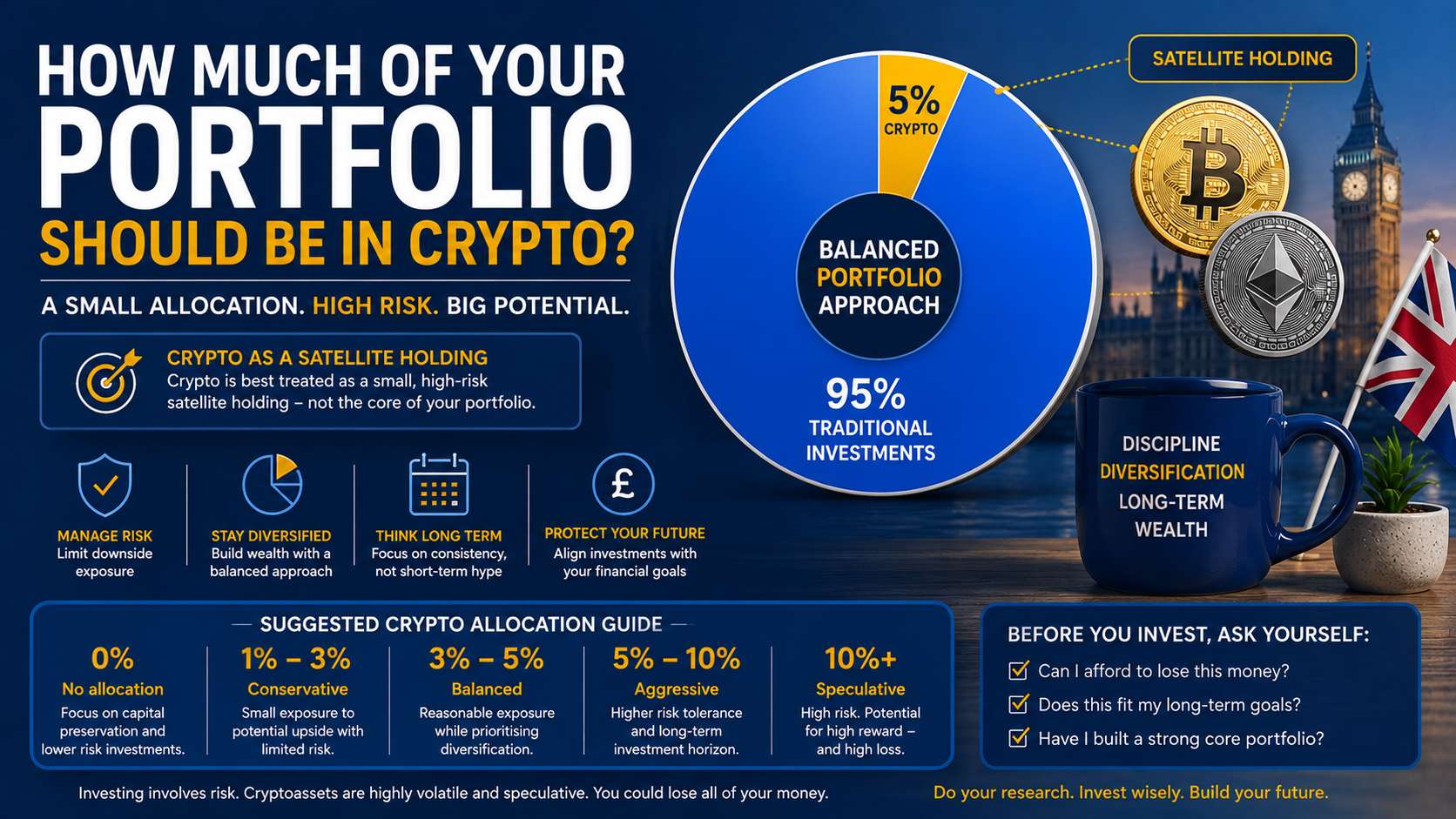
For most beginners, cryptocurrency is generally viewed as a speculative allocation rather than a core investment holding. Many financial planners suggest limiting exposure to a small percentage of an overall portfolio.
Gold as an Alternative Asset.
Gold has been used as a store of value for thousands of years and remains one of the most popular alternative investments worldwide.
Unlike shares, gold does not generate income or dividends. Instead, investors typically buy gold as a hedge against inflation, currency weakness and economic uncertainty.
Historically, gold has often performed well during periods of market stress. When confidence in financial markets falls, investors frequently move money into assets perceived as safer stores of value.
Gold can be accessed in several ways:
- Physical bullion.
- Gold coins.
- Gold exchange-traded funds.
- Shares in gold mining companies.
Many investors use gold as a defensive component within their portfolio. While it may not always outperform equities over long periods, it can help reduce overall volatility during turbulent markets.
A modest allocation to gold is often viewed as a way to complement a diversified investment strategy rather than replace growth-focused assets.
Property as an Alternative Asset.
Property remains one of the UK's favourite investment assets. For decades, many investors have viewed real estate as a tangible and understandable way to build wealth.
Property investments can generate returns through:
- Rental income.
- Property value appreciation.
- Commercial leasing arrangements.
The appeal of property often comes from its physical nature. Unlike shares or cryptocurrencies, investors can see and understand the asset they own.
There are several ways to invest in property:
- Buy-to-let properties.
- Commercial property.
- Property investment trusts.
- Real Estate Investment Trusts (REITs).
Property can offer diversification benefits, but it also presents challenges. Maintenance costs, taxes, tenant management and market cycles can all affect returns.
Recent UK commercial property data suggests the sector has shown signs of recovery, with retail property delivering returns exceeding 9% during parts of 2025. Vacancy rates have also fallen to their lowest level since 2020.
For investors seeking property exposure without direct ownership responsibilities, REITs may provide a more accessible option.
Commodities as an Alternative Asset.
Commodities are raw materials used throughout the global economy. Examples include:
- Oil.
- Natural gas.
- Wheat.
- Corn.
- Copper.
- Lithium.
Commodity prices are heavily influenced by supply and demand dynamics, weather conditions, geopolitical events and economic growth.
Investors often turn to commodities during periods of inflation because rising prices for goods and services can drive commodity values higher.
Unlike shares, commodities do not generate profits or dividends. Their returns depend entirely on price movements.
Most retail investors gain exposure through:
- Commodity ETFs.
- Commodity-focused funds.
- Shares of commodity producers.
While commodities can offer useful diversification, they can also be highly volatile and unpredictable. As a result, they are generally used as a supplementary allocation rather than a portfolio foundation.
How Much of a Portfolio Should Be in Alternative Assets?
There is no universal answer because every investor has different goals, risk tolerance and investment horizons.
For many UK investors, traditional assets such as global equities, bonds and cash remain the core building blocks of a portfolio.
Alternative assets are often used as a supporting allocation rather than the primary focus.
A sensible approach may involve:
- Maintaining the majority of investments in diversified traditional assets.
- Using alternative assets to complement rather than replace core holdings.
- Avoiding excessive concentration in any single alternative investment.
For example, some investors may allocate a small percentage to gold, property or cryptocurrency while keeping the majority invested in global equity funds and pensions.
The key is ensuring alternative assets serve a clear purpose within the overall investment strategy.
The Risks Investors Should Understand.
Alternative assets can be attractive because they offer something different. However, investors should avoid assuming that different automatically means better.
Many alternative investments carry risks that may be higher than traditional assets.
Potential risks include:
- Lower liquidity.
- Greater volatility.
- Complex pricing.
- Regulatory changes.
- Limited historical data.
- Higher fees.
Cryptocurrency, in particular, remains highly speculative. Property markets can experience prolonged downturns, while commodities can fluctuate sharply due to global events.
Understanding these risks before investing is essential.
Where Alternative Assets Fit in a Modern Portfolio.
Alternative assets can play a valuable role in a diversified portfolio when used thoughtfully and in moderation.
They offer exposure to different economic drivers and can help reduce reliance on traditional stock and bond markets. Whether through gold, property, commodities or cryptocurrency, these investments provide opportunities to diversify and potentially strengthen long-term portfolio resilience.
For most UK investors, the most effective approach is not chasing trends or seeking quick gains. Instead, alternative assets should support a broader financial plan built around clear goals, sensible risk management and long-term thinking.
Subscribe today and receive your free copy of the Investing for Beginners Handbook to help start building your investment knowledge with confidence.