For many UK savers, the question is not whether to invest. It is where to put the next £1,000.
Should it go into a pension and benefit from tax relief? Or should it be invested through a Stocks and Shares ISA for greater flexibility and tax-free withdrawals?
The answer depends on your circumstances, income, age and financial goals. However, understanding the strengths of each option can help you make a more informed decision and potentially add thousands of pounds to your long-term wealth.
The good news is that both pensions and ISAs are among the most tax-efficient investment vehicles available to UK investors. The challenge is deciding which one deserves priority when you have limited money available to invest.
Why This Decision Matters More Than Ever.
The cost of retirement continues to rise, while many people remain underprepared for later life. At the same time, frozen tax thresholds and increasing life expectancy mean savers need to make every pound work harder.
The government continues to provide substantial incentives for pension saving. HMRC estimates that pension tax relief and associated National Insurance relief cost the Treasury more than £50 billion annually, highlighting just how valuable these benefits can be for savers.
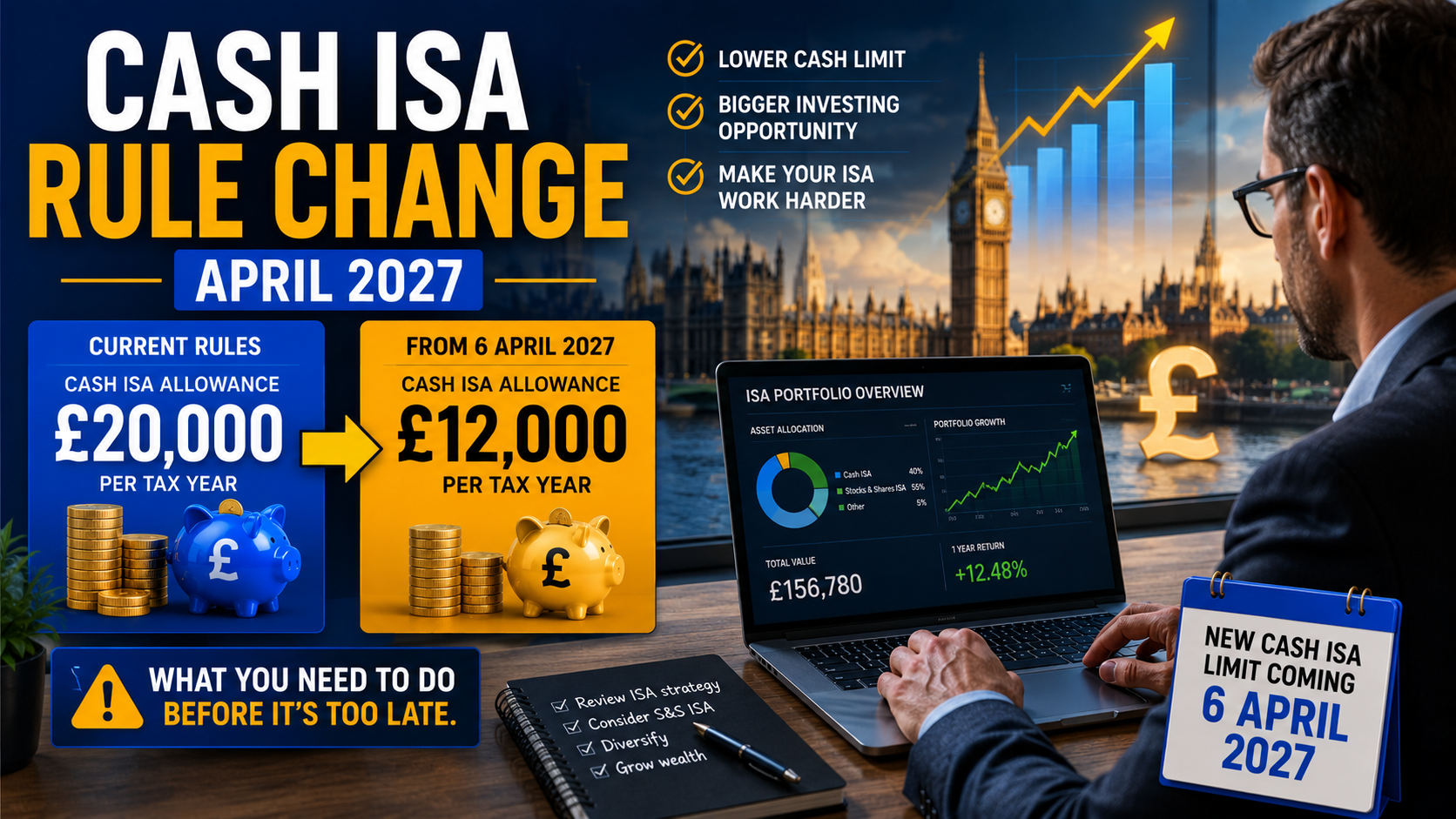
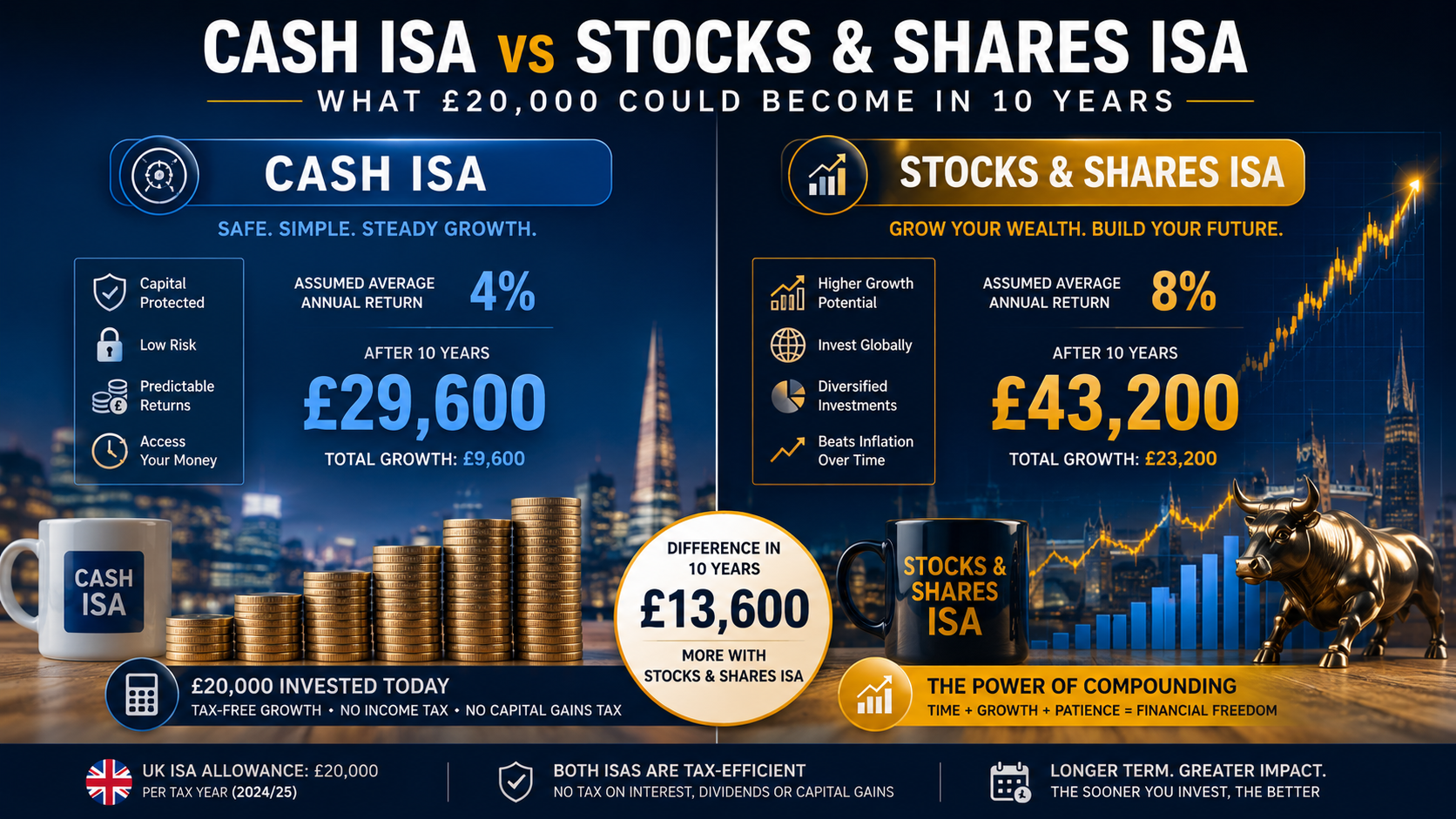
Meanwhile, ISAs remain one of the UK's most popular tax shelters, allowing investors to grow their wealth free from income tax, dividend tax and capital gains tax.
When deciding where your next £1,000 should go, understanding the trade-off between immediate flexibility and long-term retirement benefits is crucial.
The Biggest Advantage of a Pension: Employer Matching.
If you are employed and your workplace pension offers employer contributions, this should generally be your first priority.
Why?
Because employer contributions are effectively free money.
Consider a simple example. You contribute £1,000 to your workplace pension. Depending on your employer's scheme, they may contribute an additional amount alongside your contribution.
In many cases, this can instantly increase the value of your investment by hundreds of pounds before investment growth is even considered.
Very few investments offer an immediate return of this magnitude.
Failing to contribute enough to receive the full employer match is often equivalent to turning down part of your compensation package.
For most employees, the first rule is straightforward:
Always contribute enough to your workplace pension to secure the maximum employer contribution available.
Once you have achieved this, the ISA versus pension decision becomes more nuanced.
The Tax Relief Advantage of Pensions.
Pensions receive another significant boost through tax relief.
Basic-rate taxpayers receive 20% tax relief on contributions. This means that contributing £800 results in £1,000 being invested in the pension.
Higher-rate and additional-rate taxpayers may be entitled to even greater relief, making pensions particularly attractive for those with higher incomes.
Recent analysis suggests many higher-rate taxpayers fail to claim all the pension tax relief available to them, potentially leaving billions of pounds unclaimed each year.
This tax relief creates a powerful head start.
For example:
- £1,000 invested into an ISA requires £1,000 of take-home pay.
- £1,000 invested into a pension may only cost a basic-rate taxpayer £800.
- Higher-rate taxpayers can potentially reduce the effective cost even further.
This upfront boost is one of the main reasons pensions remain such an effective retirement planning tool.
The Biggest Advantage of an ISA: Flexibility.
While pensions enjoy generous tax benefits, they come with a major restriction.
Access.
Money invested within a pension is generally locked away until minimum pension access age.
For most people, this is currently age 55, rising to age 57 from 2028.
An ISA works very differently.
Money invested through a Stocks and Shares ISA can typically be withdrawn whenever you need it, without triggering income tax on withdrawals.
This flexibility can be invaluable.
You may decide to:
- Buy a property.
- Start a business.
- Fund education costs.
- Take a career break.
- Bridge the gap before retirement.
An ISA allows your money to remain accessible while still benefiting from a highly tax-efficient investment wrapper.
For investors pursuing financial independence or early retirement, this flexibility often makes ISAs an essential part of the overall strategy.
Comparing £1,000 in an ISA Versus a Pension.
Let's look at a simplified example.
Assume a basic-rate taxpayer has £1,000 available for investment.
Option 1: Stocks and Shares ISA.
- £1,000 invested.
- Growth and withdrawals are tax-free.
- Funds remain accessible.
Option 2: Pension.
- £1,000 contribution effectively becomes £1,250 if tax relief is applied to a net contribution of £800.
- Potential employer contributions may increase this further.
- Funds remain inaccessible until pension age.
In purely mathematical terms, the pension often wins.
In practical terms, life is rarely that simple.
A larger pension balance is not always preferable if you may need access to the money years or decades before retirement.
The best option depends on your financial priorities and timeline.
When an ISA May Be the Better Choice.
An ISA often deserves greater priority if:
- You have already secured the full employer pension match.
- You want flexibility before retirement age.
- You are building an emergency fund.
- You plan to retire early.
- You value unrestricted access to your investments.
Many financially independent investors deliberately build large ISA portfolios because they provide income and flexibility during the years before pension access becomes available.
For someone hoping to retire at 50, for example, an ISA can help fund living expenses until pension benefits become accessible.
When a Pension May Be the Better Choice.
A pension may deserve greater priority if:
- You are focused primarily on retirement.
- You pay higher-rate or additional-rate tax.
- You receive valuable employer contributions.
- You want to maximise tax relief.
- You are comfortable leaving the money invested for decades.
The combination of tax relief, employer contributions and long-term compounding can create exceptional outcomes for retirement savers.
For many higher earners, pensions remain one of the most powerful tax planning opportunities available.
The Simple Split Rule Many Investors Use.
For those struggling to choose, a blended approach often works well.
A practical framework is:
- Contribute enough to your workplace pension to secure the full employer match.
- Build a sufficient emergency fund.
- Split additional investments between pensions and ISAs.
Many investors use a 50-50 split once employer matching has been maximised.
This approach provides:
- Tax relief through pension contributions.
- Flexibility through ISA investments.
- Diversification across retirement and pre-retirement goals.
- Greater control over future tax planning.
The exact split may vary depending on age and objectives, but combining both wrappers often delivers the best balance of flexibility and tax efficiency.
The Retirement Planning Perspective.
One mistake many investors make is viewing pensions and ISAs as competitors.
In reality, they often work best together.
A pension can provide long-term retirement income and benefit from government incentives.
An ISA can provide flexibility, liquidity and tax-free withdrawals throughout your investing journey.
Used strategically, the two can complement each other exceptionally well.
For investors pursuing financial independence, early retirement or simply greater financial security, building both pension and ISA wealth can create a more resilient financial future.
Which Should Get Your Next £1,000?
If your employer offers matching pension contributions that you are not fully utilising, the pension is usually the clear winner.
Once employer matching has been maximised, the answer becomes more personal.
Investors seeking maximum tax efficiency may favour pensions. Those prioritising flexibility may lean toward ISAs. Many will ultimately benefit from using both.
The most important point is not choosing the perfect account. It is ensuring that the £1,000 gets invested rather than sitting idle in cash.
Over time, consistent investing tends to matter far more than whether every pound goes into an ISA or a pension.
For most UK investors, the winning strategy is not ISA versus pension. It is ISA and pension working together as part of a long-term wealth-building plan.
Want to build wealth more tax-efficiently? Subscribe and get your free copy of the UK Tax-Efficient Investing Playbook delivered straight to your inbox.